<?xml version="1.0" encoding="UTF-8"?>
<feed xmlns="http://www.w3.org/2005/Atom">
  <title type="text">Discovering Our Past: College of Charleston Histories</title>
  <updated>2026-11-08T10:13:32+00:00</updated>
  <generator uri="http://framework.zend.com" version="1.12.20">Zend_Feed_Writer</generator>
  <link rel="alternate" type="text/html" href="https://discovering.cofc.edu/redirect/"/>
  <link rel="self" type="application/atom+xml" href="https://discovering.cofc.edu/redirect/items/browse?output=rss2"/>
  <id>https://discovering.cofc.edu/redirect/</id>
  <author>
    <name>Discovering Our Past: College of Charleston Histories</name>
    <uri>https://discovering.cofc.edu/redirect</uri>
  </author>
  <link rel="hub" href="http://pubsubhubbub.appspot.com/"/>
  <entry>
    <title type="html"><![CDATA[Dreaming: Student Activism at the College of Charleston]]></title>
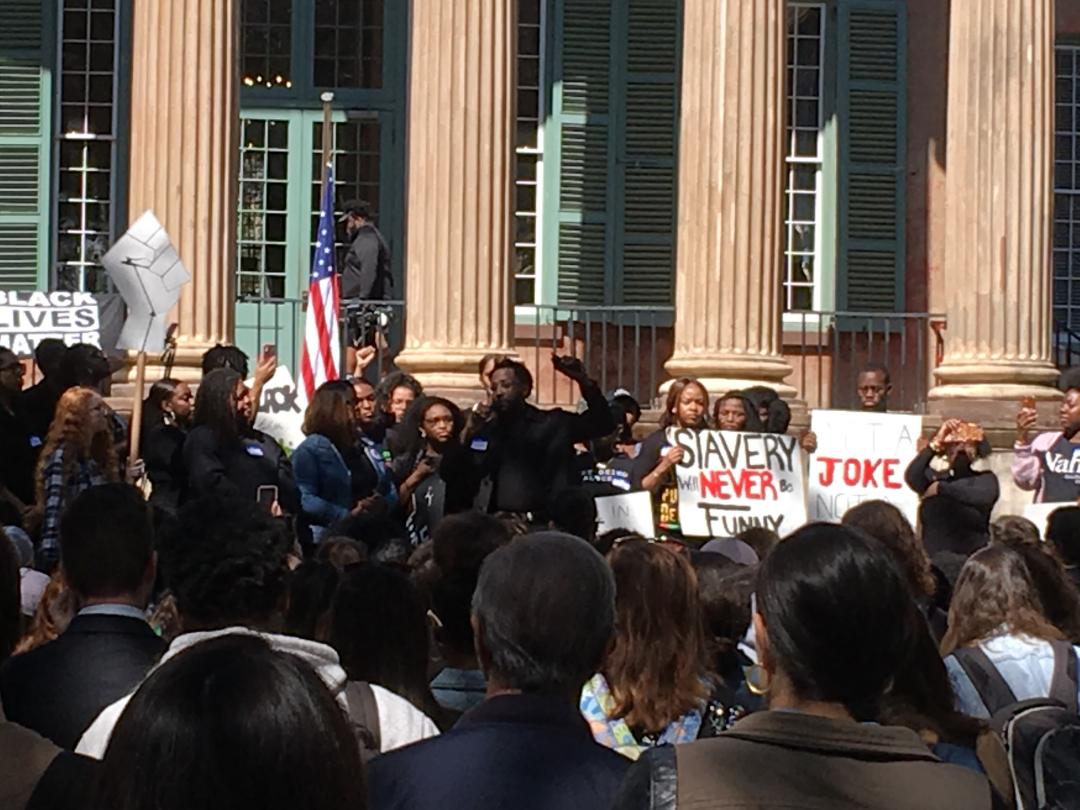
    <summary type="html"><![CDATA[<p><img src="https://discovering.cofc.edu/redirect/files/fullsize/53cac4d437d62b75e7fab1edf59990f3.jpg" alt="Students assemble on March 8, 2019, to protest a third instance of racism from peers. " /><br/><p><strong><em>Randolph Hall and Cistern Yard: two of the College’s most iconic sites. Beneath their dignified appearance, they represent contentious sites in the struggle for liberation.</em></strong></p><p><p>Randolph Hall and Cistern Yard: two of the College’s most iconic sites. Beneath their dignified appearance, they represent contentious sites in the struggle for liberation. Randolph Hall has served white men for most of the College’s history. Outside its hallowed doors, the Cistern Yard has been a gathering place for all students—including those who are marginal to power. Each space represents an important moment in the history of student activism at the College of Charleston.</p>
<p>This institution has long been a site of struggle for recognition. The US South has changed, and along with it, so has the College. As students who are not white, male, protestant Christian, and straight were admitted, these students developed collective organizing tactics that put significant pressure on the central administration. In 1943, over two decades before the College’s desegregation, Black students at the<span> </span><a href="http://ldhi.library.cofc.edu/exhibits/show/avery">Avery Normal Institute</a><span> </span>applied for admission to the College of Charleston. Rather than respond with a decision, administrators simply acknowledged the request. This was a well-worn tactic for maintaining power in the face of legitimate demands for change. In either case of acceptance or rejection of Black students, white administrators would have had to deal with the controversy of such a decision. In this case of silence, administrators remained “neutral.” In effect, their response perpetuated racism.</p>
<p>So did the “separate but equal” doctrine of the 1896<span> </span><a href="https://www.archives.gov/milestone-documents/plessy-v-ferguson"><em>Plessy v. Ferguson</em></a><span> </span>court case, which paved the way for legalized segregation in public spaces, including schools. African American students across the nation suffered from access restricted to second-rate educational facilities, supplies, and books. The court system became a battleground for change. Black plaintiffs in cases such as<span> </span><em>Murray v. Pearson</em>,<span> </span><em>Missouri ex rel. Gaines v. Canada</em>, and<span> </span><em>Sweatt v. Painter</em><span> </span>all cited a violation of their 14<sup>th</sup><span> </span>Amendment rights to change higher education systems, while the 1954<span> </span><a href="https://www.archives.gov/milestone-documents/brown-v-board-of-education"><em>Brown v. Board of Education</em></a><span> </span>decision desegregated K–12 schools. Preempting the legal mandate to open its doors to all, the College of Charleston became a private institution in 1949. The City of Charleston shirked its responsibility to the public good by selling the College of Charleston charter to a private Board of Trustees—for the price of $1.</p>
<p>Two years later, in 1951, the voice of one white male student rang across campus. At the annual Bingham Oratorical contest held at Randolph Hall, Francis “Frank” Sturcken delivered a speech advocating for the College of Charleston’s desegregation. Its title, “The Liquid South,” referred to the region’s shifting political sensibilities. Sturcken developed what he calls the “Christian democratic” point of view as a moral justification for desegregation.</p>
<p>At the time he delivered the speech as a senior, Frank Sturcken had already won the Bingham Oratorical Medal twice; it came as no surprise that the faculty judges selected him again as a winner. He was active on campus as a member of Pi Kappa Phi fraternity and the Newman Club, a Catholic student organization he led in his junior year. To him, desegregation was a moral obligation to freedom and equality.</p>
<p>Given that Sturcken was the apparent beneficiary of segregation, he was not acting only in his own self-interest. His impassioned argument was also multidimensional. He cited the contemporary legal justification for segregation, the disparities in the cost of college between African American and White students, and the marring effect segregation had on spiritual wellness. He even referred to his own experience of losing his “artificial superiority over the Negro [sic] race.” Having grown up just over a mile away at 729 ½ King Street, Sturcken was a Southerner. This is how he offered his own redefinition of the South.</p>
<p>To get a sense of how common Sturcken’s perspective was, we can look at the survey he conducted of his White classmates. While the overwhelming majority gave affirmative answers, 36% said they did<span> </span><em>not</em><span> </span>believe African Americans should be admitted to the College of Charleston because they do not “have the moral or ethical right to attend.” On another question, 14% responded that they would “antagonize attending classes with [Black students].” This minority was not insignificant, but these figures revealed that the administration acted contrary to the wishes of the majority.    </p>
<p>Sturcken’s speech was not just reprinted in newspapers in South Carolina, but across the country: from New Orleans to New York, Sturcken received many letters of support. They were from both Black and white people, everyday citizens and civil rights leaders alike.<span> </span><a href="https://www.uscourts.gov/news/2014/04/14/vilified-1940s-federal-judge-honored-civil-rights-hero">Judge Julius Waties Waring</a><span> </span>was one. The same year Sturcken delivered his speech, Judge Waring, a fellow Charlestonian and College of Charleston alum, wrote the controversial dissenting opinion in support of desegregating Clarendon County Schools. He contacted and then met with Sturcken following the speech. One Black civil rights leader, Dr.<span> </span><a href="https://www.georgiaencyclopedia.org/articles/education/benjamin-mays-ca-1894-1984/">Benjamin E. Mays</a><span> </span>of the Southern Conference Educational Fund, wrote a column expressing concern over the consequences young Sturcken could suffer for his bravery. Mays sympathetically predicted, “he will be ostracized socially, doomed economically, and defeated politically” in the fallout from his speech. Unfortunately, Mays was right. Following his speech, Sturcken was blacklisted by the administration, including the segregationist President George Grice. This was not helped by the ambiguous position of the faculty. Although it was faculty members who award the Bingham Oratorical Medal, it was also faculty who attempted to dissuade Sturcken from speaking on the subject in the first place.  </p>
<p>This mistreatment pales in comparison to the violence African Americans faced in the Jim Crow South. Furthermore, Sturcken’s speech was not without fault. The speech represented the colorblind race liberalism of its time. Its outdated language included a slur and erased Black women. And at times, it assumed a self-righteous tone. Despite, or even<span> </span><em>because</em><span> </span>of, these disappointments, Sturcken’s speech has a great deal to teach us in how to use one’s own position and background in the fight for justice. First in 2018 and again in 2020, the<span> </span><a href="https://today.cofc.edu/2018/09/21/alums-1951-speech-on-desegregation-inspires-new-oratorical-competition/">Sturcken Memorial Oratorical Competition</a><span> </span>gave students a platform for freedom of expression and progressive institutional change inspired by Sturcken’s bravery. (His daughter Elizabeth Sturcken travelled to support it both times.)</p>
<p>                           ______________________</p>
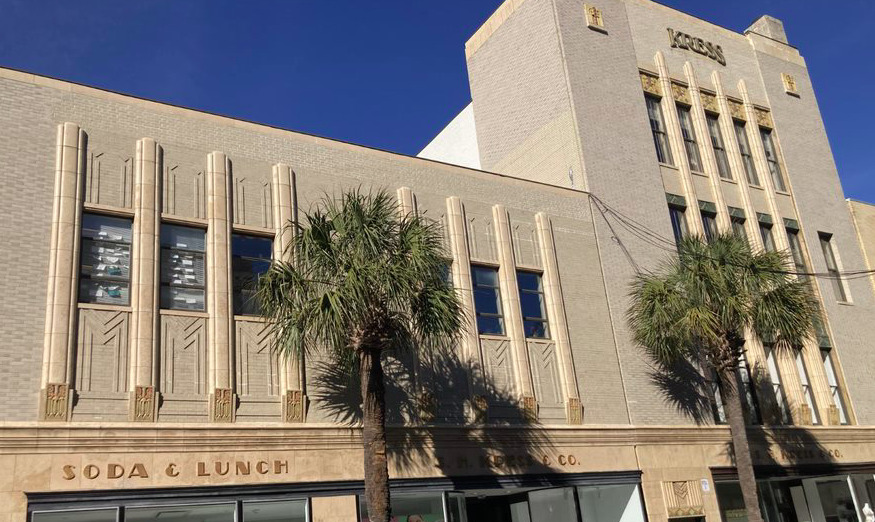
<p>Whereas there are several examples of individual students at the College challenging the established power structures, there are many more examples of collective action. There are also several examples of students exercising First Amendment rights to freedom of assembly, on and around the College of Charleston campus. In 1960, Burke High School students<span> </span><a href="https://www.preservationsociety.org/locations/kress-building-sit-in/">held a sit-in</a><span> </span>at the segregated Kress Building just a block from campus. In 1985, Black students protested their exclusion from the 200<sup>th</sup><span> </span>anniversary celebration at the College of Charleston. In 2014, students protested the<span> </span><a href="https://www.npr.org/2014/05/09/310726247/gay-friendly-book-selections-put-college-funding-at-risk">State legislature’s backlash</a><span> </span>over the College’s selection of<span> </span><em>Fun Home</em>, a lesbian coming of age graphic novel, for, <em>The College Reads!</em>, the campuswide common book program. When I was a junior at the College of Charleston, there was another protest. For the second year in a row, fellow students had dressed up in racist Halloween <a href="https://charlestoncitypaper.com/2018/11/02/cofc-softball-team-will-undergo-diversity-training-after-players-pose-in-team-hispanics-and-border-patrol-costumes/">costumes</a>.  Students assembled to express righteous anger over this racist spectacle right here on the Cistern Yard. Students of all different backgrounds formed the Intersectional Cougar Action Network (I-CAN): a coalition of all marginalized student groups on campus.</p>
<p>Although we assembled to protest anti-Black racism, our ethos was to nurture connections between communities both for healing and institutional change alike. Student activists from across campus joined together to work from multiple angles, leveraging leadership positions in various student organizations across campus. As a team, however, we avoided official recognition as a student club. This allowed us to escape unstated institutional priorities but also meant we had to get creative to secure institutional resources, like meeting spaces and event funding. We wrote letters addressed to the administration about the current state of campus, and we worked for sustainable institutional change. We arranged countless meetings over the course of five years to pass the curriculum requirement for Race, Equity, and Inclusion. We saw right through the timeless message of administrators and Student Government alike, that “now isn’t the time” and “we’re going to make others angry.” Thanks to peer mentorship, the coalition has remained. All sorts of people were represented: women, men, nonbinary, and transgender people; Black, Latinx, white, and Asian-American peoples; secular, along with peoples of Jewish, Christian, and Buddhist faiths; straight, gay, lesbian, queer folks; people with various economic backgrounds, from different parts of the country. We invited everyone to the table because we believed everyone has a valuable perspective. We stayed there because we believed our fates are bound together.</p>
<p>If the College of Charleston really is “the most firmly entrenched stronghold of tradition in the country,” as Sturcken said it was, we have much to learn from the spirit of student activism. Although this spirit has at times receded, especially in the present moment, as institutions absorb and weaken the rhetoric of struggles for liberation, students continue to dream of a just world. They work beyond simple campus reform through Student Government, grievances, and efforts to simply “raise awareness.” When I think back to my days as a student activist, I’m proudest of how we braided solidarities across lines of difference. It was hard, but what would a campus be without the relentless hope and idealism of students? Tell me, how would our world fare without demands that we finally live up to our nation’s promises? That students do this<span> </span><em>while students</em>—amidst study breaks and breakups, through the joys and sorrows of growing up—is amazing. It lends a durable understanding of what it takes to repair this broken world. We can’t give that up now.</p>
<p> </p></p></p><p><em><strong><a href="https://discovering.cofc.edu/redirect/items/show/75">For more (including 8 images), view the original article</a>.</strong></em></p><p><br><small>Find us on <a href="https://www.facebook.com/collegeofcharleston">Facebook</a> and <a href="https://twitter.com/cofc">Twitter</a></small></p>]]></summary>
    <published>2024-05-01T21:44:16+00:00</published>
    <updated>2025-01-24T19:56:34+00:00</updated>
    <link rel="alternate" type="text/html" href="https://discovering.cofc.edu/redirect/items/show/75"/>
    <id>https://discovering.cofc.edu/redirect/items/show/75</id>
    <author>
      <name>Tanner Crunelle</name>
    </author>
  </entry>
  <entry>
    <title type="html"><![CDATA[H. A. DeCosta Company – Harleston Village Historical Renovations]]></title>
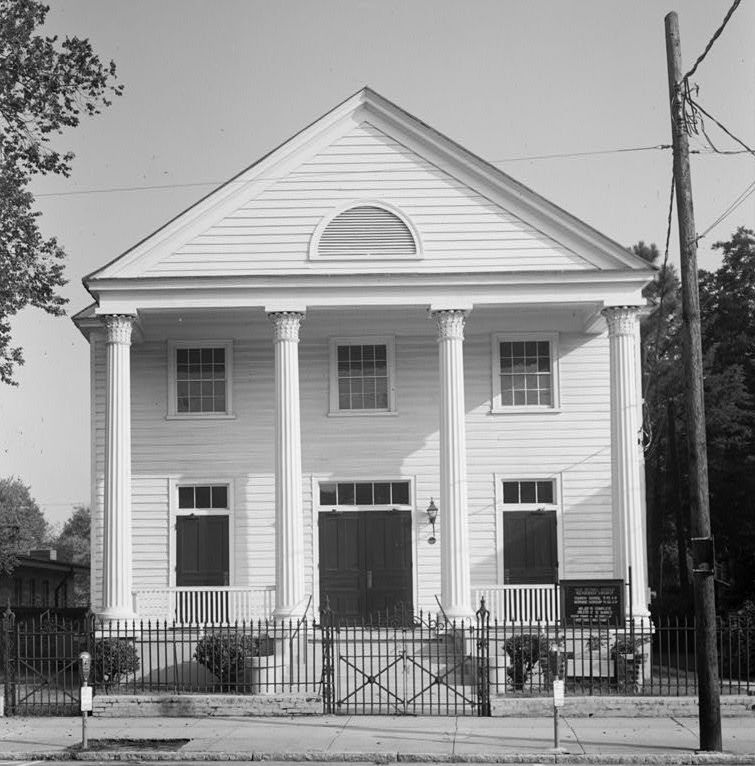
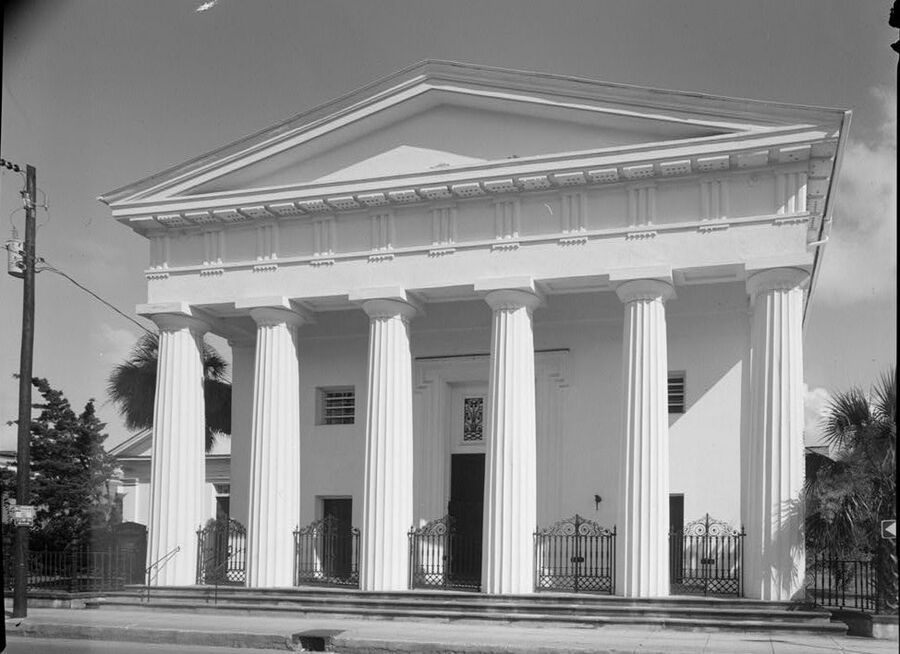
    <summary type="html"><![CDATA[<p><img src="https://discovering.cofc.edu/redirect/files/fullsize/64cae7060c59f64323a1f2fc234f3764.jpg" alt="The President&#039;s House: 6 Glebe Street" /><br/><p><strong><em>The H. A. DeCosta Company was a thriving, Black-owned architecture and construction business three generations in the making. Benjamin DeCosta first started the business in 1899, and, in 1919, Herbert DeCosta Sr., Benjamin’s son, started the H. A. DeCosta Company. Herbert A. DeCosta Jr., was born in Charleston in 1923 and, from age twelve, worked alongside his father, Herbert DeCosta Sr.</em></strong></p><p>The H. A. DeCosta Company was a thriving, Black-owned architecture and construction business three generations in the making. Benjamin DeCosta first started the business in 1899, and, in 1919, Herbert DeCosta Sr., Benjamin’s son, started the H. A. DeCosta Company. Herbert A. DeCosta Jr., was born in Charleston in 1923 and, from age twelve, worked alongside his father, Herbert DeCosta Sr. After graduating from the Avery Normal Institute, the younger DeCosta decided to attend Iowa State College to pursue a degree in architectural engineering. DeCosta told the Post and Courier that Clemson would have been the clear choice had it not been racially segregated, along with nearly all other schools in South Carolina. DeCosta worked for several years as an architectural engineer at the National Advisory Committee for Aeronautics, which is now the National Aeronautics and Space Administration (NASA). By 1947, DeCosta returned to his family’s company in Charleston and, in 1960, became President of the H. A. DeCosta Company, whose offices were at 93 Spring Street, just a few blocks north of historic Harleston Village.</p><p>DeCosta’s tenure at the H. A. DeCosta Company is punctuated with accolades for his work in historic renovation, in particular the restoration of eighteenth- and nineteenth-century homes. Across the South, DeCosta garnered a reputation for excellence in his field, working on prominent historical homes such as the Herndon Mansion in Atlanta, Georgia, and the President’s House at the College of Charleston. Much of DeCosta’s professional efforts were concentrated in Charleston, and he completed many historical renovation projects with the Historic Charleston Foundation. He was a member of numerous professional and community organizations, including the National Association for the Advancement of Colored People (NAACP), the Avery Institute of Afro-American History and Culture, the South Carolina State Historical Preservation Board, the National Association of Home Builders, the Home Builders Association of Greater Charleston, and the Historic Charleston Foundation. DeCosta also won numerous awards for his exemplary work, including the S.C. Governor’s Award for Historic Preservation in 1998, the Historic Charleston Foundation’s Frances Edmunds Award for Historic Preservation in 2002, and the Three Sisters Award from the Committee to Save the City in 2004. Additionally, Black Enterprise magazine named the H. A. DeCosta Company as one of its Top 100 Black Businesses in the United States in 1979. </p><p>At the College of Charleston, <a href="https://discovering.cofc.edu/items/show/3">the President’s House</a>, also known as the Reverend Robert Smith House, stands out among DeCosta’s most prominent works in Harleston Village. The Georgian-style building is an imposing three-story brick home with large, foliage-covered steps leading to the main floor, and it was the site of some of the first classes held at the College of Charleston. The job was complex, requiring a complete restoration and renovation that stayed true to the original structure and architecture of the historic building. DeCosta personally created the house’s Georgian doorway, as well as restored the stairs inside the house, installed new windows and shutters, and removed a structure towards the back of the house. This process also involved installing modern appliances, such as a refrigerator, and ensuring that the house’s wiring complied with contemporary building codes. DeCosta constructed an entirely new closet and bathroom on the first floor and provided proper insulation to protect the house from the elements. Even after finishing these major construction projects, the house needed extensive exterior fixes that had to be completed in the style of the original eighteenth century Georgian architecture. </p><p>One of his most fascinating jobs was a former grocery store, masonry shop, and liquor store on the corner of Wentworth and Coming Streets. 114 Wentworth Street was originally built around 1805 by a man named Jonas Beard, after he purchased the land from St. Phillip’s Church, one of the oldest congregations in Charleston. Sometime in the 1850s, John C. Mehrtens bought the property and converted it into a grocery store. The College of Charleston bought the building in 1975. Later that year, the College’s president, Ted Stern, sought the advice of several renovation experts and all had advised Stern to demolish the building. After seeing the building, DeCosta initially thought it would have to be destroyed, but after taking another look at the site with his team, he decided they could save it. Saving it, as it turned out, involved removing all the stucco affixed to the top story of the house and replacing it with its original weatherboards. The team also worked to copy the design of the second story onto the first story, an undertaking that required windows and doors to be replaced or moved to comply with modern building codes. Today, 114 Wentworth Street houses the College of Charleston’s Department of Political Science. In a 2003 interview with the Historic Charleston Foundation, DeCosta called it “one of the most interesting buildings the College has.”</p><p>Another major historical renovation the H. A. DeCosta Company undertook in Harleston Village was the <a href="https://discovering.cofc.edu/items/show/52">Mt. Zion AME Church</a> at 5 Glebe Street. Originally built in the mid-nineteenth century in the style of British classicism, the Mt. Zion African Methodist Episcopal (AME) Church was one of the first Black-owned churches in Charleston. The church required extensive interior and exterior repairs, and modernization to allow today’s congregants to comfortably use the space. Several doors and windows needed to be completely replaced with historically appropriate, though still functional and aesthetically pleasing, alternatives. Inside and out, the building required many coats of paint and weatherproofing to ensure that the refurbishments withstand time. DeCosta also installed air conditioning and heating systems, updated electric lighting, and new electrical wiring across the building. Floors and walls throughout the building needed repairing or replacement, and parts of the gutters outside had completely rotted away. In total, the historical renovation of the Mt. Zion AME Church totaled close to $50,000. Today, the renovated church remains an impressive example of English classicism-styled architecture.</p><p>The DeCosta family and the H. A. DeCosta Company profoundly contributed to preserving Harleston Village, by renovating and reconstructing homes and places of worship. Herbert DeCosta Jr. and the H. A. DeCosta Company’s fine craftsmanship in the field of historic preservation protected historic Harleston Village for future generations to learn about and enjoy. DeCosta said in an interview in 1995 that Charleston’s census records prove it was common, even in the antebellum period, to see Black craftsmen at work in jobs like carpentry, bricklaying, and construction.</p></p><p><em><strong><a href="https://discovering.cofc.edu/redirect/items/show/74">For more (including 5 images), view the original article</a>.</strong></em></p><p><br><small>Find us on <a href="https://www.facebook.com/collegeofcharleston">Facebook</a> and <a href="https://twitter.com/cofc">Twitter</a></small></p>]]></summary>
    <published>2024-04-24T19:33:24+00:00</published>
    <updated>2025-01-24T19:59:30+00:00</updated>
    <link rel="alternate" type="text/html" href="https://discovering.cofc.edu/redirect/items/show/74"/>
    <id>https://discovering.cofc.edu/redirect/items/show/74</id>
    <author>
      <name>Anna Miller</name>
    </author>
  </entry>
  <entry>
    <title type="html"><![CDATA[Black Burial Sites and Memorials on Rivers Green  – Commemorating Black Charlestonians on C of C&#039;s campus]]></title>
    <summary type="html"><![CDATA[<p><img src="https://discovering.cofc.edu/redirect/files/fullsize/9db5ac09294de76914aad72a187ed7ac.jpg" alt="Juneteenth Flags on Rivers Green" /><br/><p><strong><em>Over two centuries ago, free people of color buried their dead near this spot. In 2008, the College installed this memorial on Rivers Green, outside Addlestone Library. Nearby, another marker commemorates a beloved librarian and member of Emanuel AME church. </em></strong></p><p>The Brown Fellowship Society, founded November 1st, 1790 by Charleston’s community of elite free persons of color, is more than two centuries old. This Society was once central to the African American community of Charleston, and members maintained a cemetery next to their meeting hall on Pitt Street. This property is now a paved parking lot for Addlestone Library and Rivers Green. Every single day students and staff at the College pass through one of the most important sites in the history of the City’s African American community, whether they know it or not. </p><p>In 1790 five members of Charleston’s free Black elite - James Mitchell, George Bampfield, William Cattel, George Bedon, and Samuel Saltus - gathered together and formed the Brown Fellowship Society. The society was meant to be a mutual aid association for the free Black community in a time that permitted them minimal benefits from public services. Rather, they had to provide for their own needs even though they were deeply disadvantaged in comparison to their white counterparts. </p><p>Membership in the Society was originally limited to fifty men of Charleston’s free people of color, most of whom would have been affiliated with the St. Philip’s Episcopal Church. Most of these men were of the artisan community or business entrepreneurs. Some of their original goals were assisting widows and orphans of members, providing burial plots, and other various services. At one point in the early nineteenth century they established a school for free people of color. This school was established by Thomas Bonneau in 1807 in Richard Holloway’s yard, for the children of the society’s members. They also supported and educated a young orphan who later became a bishop in the AME Church. </p><p>The Society used their treasury as a sort of revolving fund to provide capital for enterprising members who wanted to get involved in real estate or make investments in other endeavors. At one point the Brown Fellowship Society gained a large amount of real estate from the College of Charleston starting in 1794 and on up until 1820. The society then converted the real estate to bank stocks because they determined that they would receive a greater return. By 1856, the society’s original investment was worth $6,000, which was then shared by the members. As a part of this financial support, the society also functioned as a sort of credit union, allowing its members to borrow from its treasury. </p><p>One of the main benefits of the society was the use of its cemetery. Because these free people of color were not allowed to be buried in St. Philip’s Episcopal Churchyard Cemetery, they founded their own. Both members and their families could be buried in the Society’s cemetery upon their death. If for any reason a member who died did not leave behind enough money to provide for burial cost and to support their children, the society would assume their burden. The society would financially support and educate their children until they reached the age of fourteen, at which time they would be apprenticed out to craftsmen until they became an adult. The people buried in that cemetery include some of the most affluent members of Charleston’s free Black community. </p><p>At least three more African American cemeteries opened here: The Machpelah Society, taking its name from the Tomb of the Patriarchs (Machpelah) in the Old Testament; Plymouth Church, a nearby African American Congregational Church; and the Free Dark Men Society, another antebellum organization of free people of color. </p><p>Burials in the cemetery continued well into the 1900s, until the property was purchased by the Roman Catholic Diocese of Charleston so that a parking lot could be paved for Bishop England High School. Despite promising to relocate the headstones, monuments, and remains to the new graveyard located off of Cunnington Avenue, there is no evidence that this occurred. Most of the remains were never removed, and very few of the gravestones were relocated. Bishop England paved over the history of Charleston’s Black community as if it did not exist. </p><p>Recognition finally came after the construction of Addlestone Library, when the College of Charleston erected a monument in honor of those who were buried on the property. The College of Charleston held a dedication ceremony for the African-American Cemetery Memorial on February 7th, 2008 at Rivers Green of the Marlene and Nathan Addlestone Library. Some of those in attendance included the Dean of Libraries at the College of Charleston, the President of the College of Charleston, College of Charleston History Professor Dr. Bernard Powers Jr., and Mr. Anthony B. O’Neill, President of the Brown Fellowship Society. In the Program for the Dedication Dr. Powers writes, “By recognizing the African-American cemeteries as an important site of memory, a significant chapter is being written in Charleston’s modern history. Simultaneously, homage is being paid to its past.” To Dr. Powers, “This location adjacent to the Addlestone Library at the College of Charleston is especially compelling because the men in these organizations were interested in promoting education.” </p><p>Elsewhere on Rivers Green, tucked in a small garden at the southeast corner of the building, between the terrace and a fence along Coming Street, a memorial to a more recent community member and educator can be found. The memorial pays tribute to <a href="https://today.cofc.edu/2015/12/16/remembering-cynthia-hurd/">librarian Cynthia Graham Hurd</a>, who was one of the victims of the <a href="https://ldhi.library.cofc.edu/exhibits/show/mother-emanuel-tribute/overview">tragic Mother Emanuel shooting on June 17, 2015</a>. Graham was a beloved librarian at Addlestone and at the Charleston County Library.</p></p><p><em><strong><a href="https://discovering.cofc.edu/redirect/items/show/73">For more (including 14 images), view the original article</a>.</strong></em></p><p><br><small>Find us on <a href="https://www.facebook.com/collegeofcharleston">Facebook</a> and <a href="https://twitter.com/cofc">Twitter</a></small></p>]]></summary>
    <published>2023-05-23T22:15:52+00:00</published>
    <updated>2025-01-23T23:01:10+00:00</updated>
    <link rel="alternate" type="text/html" href="https://discovering.cofc.edu/redirect/items/show/73"/>
    <id>https://discovering.cofc.edu/redirect/items/show/73</id>
    <author>
      <name>Grace Hall, Harlan Greene, and the Committee on Commemoration and Landscapes</name>
    </author>
  </entry>
  <entry>
    <title type="html"><![CDATA[105 Wentworth Street – Septima Clark&#039;s home once stood here]]></title>
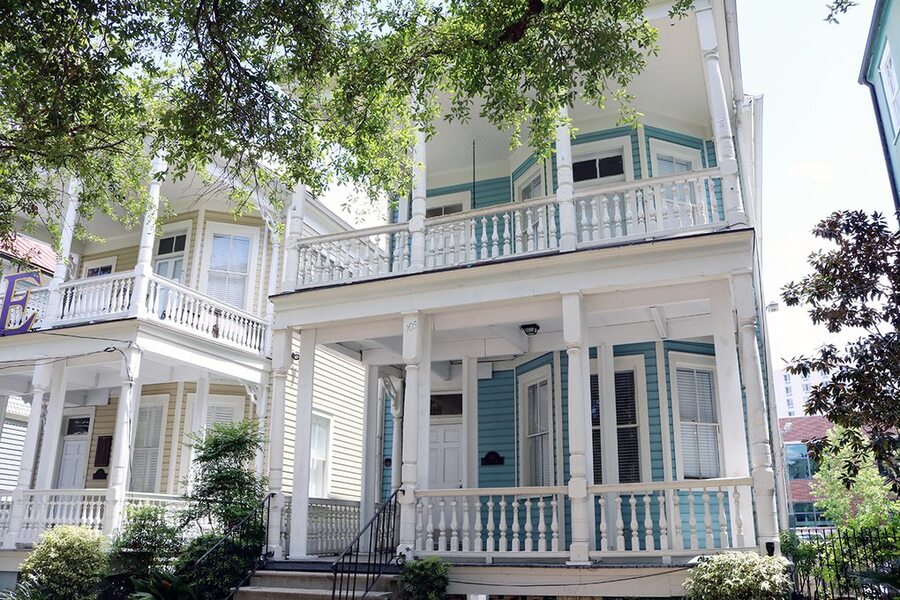
    <summary type="html"><![CDATA[<p><img src="https://discovering.cofc.edu/redirect/files/fullsize/0554d0c698c818e59cae5843dd5728b6.jpg" alt="Present-day 105 Wentworth Street, College of Charleston" /><br/><p><strong><em>Civil rights activist Septima Poinsette Clark was born at this address in 1898. Her mother worked as a laundress and her father had been enslaved to a College of Charleston trustee. This family, like other Black citizens, had few legal rights and limited opportunities. Clark worked to change these conditions, drawing inspiration and support from her family and community.</em></strong></p><p>In 1898, when Septima Poinsette was born in a house on 105 Wentworth Street, Black citizens had few opportunities to advance in American society. Virtually no Black people could vote; although Black men in South Carolina gained that right during Reconstruction (1865-1877), white South Carolinians rolled back Blacks’ civil rights in the late 1800s. Reconstruction had extended voting rights to all men and had implemented a free public school system, but South Carolina’s 1895 constitution excluded Blacks from voting and mandated segregated schools. Amid these repressive circumstances, Peter and Victoria Poinsette managed to create full lives for themselves and their children. They succeeded, not only through their personal efforts, but also with the support of Black schools, churches, clubs, and neighborhoods that surrounded the Poinsette family in Charleston.</p><p>Records do not indicate how long Septima Poinsette Clark’s ancestors lived in the Americas. She believed her mother’s family had some Native American ancestry, which she and her cousin remembered as Seminole, Muskhogan, or Santee. As with many Black and Indigenous people, “official” records are not available to confirm all these family memories. Regarding her father, Ms. Clark told interviewers that his enslaved mother died while he was young, and that she knew nothing about her paternal grandfather. Her father, Peter Porcher Poinsette, was probably born in the late 1840s near Georgetown, SC. His enslavers were Mary Izard Pringle Poinsett and her second husband, Joel Poinsett, a diplomat, politician, and trustee of the College of Charleston.</p><p>As an enslaved child, Peter Poinsette had received no schooling. Like most Black South Carolinians (and over forty percent of whites), he was illiterate. His wife, Victoria Anderson Poinsette, was better educated. She was born in 1870 in Charleston, then spent part of her girlhood in Haiti, where she received some education. “That made her the proud soul she was all her life,” her daughter later said. As an adult, Mrs. Poinsette, who worked from home as a laundress, was active in Black women’s clubs and in her church, Old Bethel United Methodist, near the College of Charleston on Calhoun Street. Mr. Poinsette worked as a waiter, caterer, and custodian, and briefly co-owned a restaurant on State Street; he was a member of Centenary United Methodist Church. The Poinsette children attended both churches as well as Sunday school and services at Zion Presbyterian and Emanuel AME Church.</p><p>When Septima Poinsette was six, her family moved to a house on Henrietta Street. There the children helped their mother wash and iron her customers’ laundry, fetched buckets of water from the fountain in Marion Square, and on some Sundays, took walks with their mother down King Street and along the Battery. At home, Mrs. Poinsette enforced strict discipline, and she stood her ground with other people. Once when a policeman came through the yard, saying he was pursuing a suspect, Mrs. Poinsette shooed him away, saying, “I’m a little piece of leather, but I’m well put together, so don’t you come in here.” Mr. Poinsette had a more tranquil disposition. He often cooked for the family, and his daughter later recalled “sitting around that pot-bellied stove” and absorbing three important lessons from her father: always tell the truth, never “exalt yourself,” and “see others as Christ saw them. . . seeing that there is something fine and noble in everybody.” </p><p>Decades later, Ms. Clark reflected on her parents’ influence. “I always say that I stand on the platform that was built by both my mother and my father. My mother with her courageous philosophy, and my father with his non-violent philosophy. I think I have some of both in me.”</p><p>Both parents wanted the best possible education for their children. Mrs. Poinsette supervised the children’s homework and arranged for music lessons and, in some years, for private schooling. “There were lots of Black women who had little schools in their homes,” Ms. Clark later recalled, “and I really learned in that kind of school.” In other years, she attended segregated public schools, including Charleston Colored Industrial School (now Burke High School), which then ended at the 8th grade. There were no public high schools for Black students. </p><p>In 1912, eager to continue her education, the teenaged Septima Poinsette enrolled in the Avery Normal Institute, a private school founded in 1865 to train Black teachers. Encouraged by her family, neighbors, and Black educators in Charleston, she was on her way to achieving more than her parents had been allowed to do. To learn more about Septima Clark's life, take <a href="https://discovering.cofc.edu/tours/show/7">this virtual tour</a> or visit the Septima Clark Auditorium in the Education Center, room 118.</p></p><p><em><strong><a href="https://discovering.cofc.edu/redirect/items/show/72">For more (including 9 images), view the original article</a>.</strong></em></p><p><br><small>Find us on <a href="https://www.facebook.com/collegeofcharleston">Facebook</a> and <a href="https://twitter.com/cofc">Twitter</a></small></p>]]></summary>
    <published>2023-05-10T19:56:01+00:00</published>
    <updated>2025-01-23T21:56:29+00:00</updated>
    <link rel="alternate" type="text/html" href="https://discovering.cofc.edu/redirect/items/show/72"/>
    <id>https://discovering.cofc.edu/redirect/items/show/72</id>
    <author>
      <name>Julia Eichelberger</name>
    </author>
  </entry>
  <entry>
    <title type="html"><![CDATA[Fort Johnson Monument – One of many monuments glorifying the Confederacy]]></title>
    <summary type="html"><![CDATA[<p><img src="https://discovering.cofc.edu/redirect/files/fullsize/fc1445eda2524874c8adba759e4b05e8.jpg" alt="Fort Johnson Civil War Monument" /><br/><p><strong><em>The Charleston Confederate War Centennial Commission, chaired by Mrs. J. C. Long, gave this monument to the College of Charleston in 1961, one hundred years after the Civil War began. In Charleston, the centennial celebrated the Confederacy and promoted the racial caste system known as Jim Crow.</em></strong></p><p>The Charleston Confederate War Centennial Commission, chaired by Mrs. J. C. Long, gave this monument to the College of Charleston on the hundredth anniversary of the start of the Civil War. College of Charleston History Professor Elmer L. Puryear, also a member of the Commission, presided over the dedication ceremony on April 13, 1961. The monument, the ceremony, and the Confederate War Centennial Commission itself were all part of a larger cultural campaign to perpetuate the racial caste system known as Jim Crow. </p><p>The monument commemorates the Confederates' firing on Fort Sumter on April 12, 1961 (see image 1). The bare facts stated on the monument are accurate, but they deliberately obscure the fact that Southern states seceded and started the war in order to establish a new nation based not on the truth that all men are created equal, but on slavery and racial inequality. (See Image 2.) </p><p>At first, the war seemed to give the United States its “new birth of freedom,” as Abraham Lincoln called it in his Gettysburg Address. Union troops—many of them Black soldiers—liberated Charleston on February 18, 1865. The entire insurrection collapsed a few months later. The 13th, 14th, and 15th Amendments to the Constitution abolished slavery; granted full citizenship to everyone born in the U. S., regardless of race; and assured all citizens of the “equal protection of the laws.” During Reconstruction, more than 80,000 Black South Carolinians registered to vote, ratified a new state constitution, and exercised their inalienable right to self-government for the first time. They elected many Black legislators to both houses of the General Assembly. </p><p>But the proponents of inequality were resilient. </p><p>Almost the moment the Confederacy collapsed, certain white southerners began re-interpreting the Confederacy not as a mission to preserve and spread slavery, but as a noble cause of self-defense. Known today as the “Lost Cause” interpretation of history, this view holds that in 1861 northern aggressors disrupted a just society in which relations between Blacks and whites were cordial, stable, and in accord with nature. Nature itself made the races of humanity unequal. White people were manifestly superior in intellect and moral capacity, while Black people, suited to brute manual labor, were not fit and could not be made fit to exercise self-government. Democracy, they believed, was doomed by human nature. </p><p>While most white Southerners conceded that slavery was not coming back, many continued to insist that white supremacy was the proper basis of government. White supremacists intimidated and murdered Black and Republican voters. At first, the federal government intervened, using the Army to maintain civil rights in the South. But eventually, the white proponents of equality suffered what historians call “moral fatigue” and lost the will to protect civil rights. Between 1876 and 1896, a series of court cases, culminating in the notorious Plessy v Ferguson, allowed the states of the old Confederacy to re-establish inequality. South Carolina became a fake democracy in which a privileged minority imposed a segregated caste system, which came to be called “Jim Crow,” on the majority of its citizens. </p><p>The triumph of Jim Crow was reflected in mainstream culture. Monuments glorifying the Confederacy went up all over the South. The Calhoun Monument in Marion Square, erected in 1896, and the Monument to the Confederate Defenders of Fort Sumter at White Point Gardens, dedicated in 1932, are good examples of how public memory explicitly promoted the “Lost Cause” interpretation of the Civil War and implicitly reinforced the ideology of Jim Crow.<br />
<div style="text-align:center;"></div>
Black Americans in every generation fought against Jim Crow, and by the 1950s they had begun to rouse the nation from its “moral fatigue.” The modern Civil Rights Movement gained momentum and began to threaten Jim Crow. </p><p>The centennial of the Civil War became a referendum on civil rights. E. Milroy Burton, the director of the Charleston Museum, insisted that Charleston must get its act together or the “Northern point of view”—that the Civil War was about racial equality—would prevail. An all-white commission was organized to protect the “Lost Cause” version of history. </p><p>The commission’s work began with its name. The national organization was the “Civil War Centennial Commission,” but the local branch named itself the “South Carolina Confederate War Centennial.” In 1961, calling the Civil War the “Confederate War,” the “War of Secession,” the “War Between the States,” or the “War of Northern Aggression” communicated one’s allegiance to Jim Crow. </p><p>The national Centennial Commission had planned to convene in the Francis Marion Hotel, but that hotel was segregated, and Madaline Williams, a commission delegate from New Jersey, would not be able to stay there. Controversy ensued, and President Kennedy ultimately moved the Commission to the Naval Base in North Charleston, while the "Confederate War Centennial" continued to uphold its values. </p><p>On the eve of the centennial, South Carolina Senator Strom Thurmond gave the keynote address to at the Confederate War Commission’s banquet. Equality, he explained, was never a principle of American political philosophy. It was a “Marxist idea,” and he called on “overzealous radicals” to give up their “integrationist idealism” so that America’s caste system might “triumph over the forces of communism."</p><p>“There was no bigger day for white Charleston” than the centennial, the journalist, Steve Bailey regretfully remembers. The ten-year old boy saw Alhambra Hall in Mt. Pleasant “decorated and awash in people who had come to watch the reenactment of the bombardment of the Union forces.” Everyone “cheered wildly” when the Confederates won. “There was never a question that day about whose side we were on.” </p><p>There is no doubt that in 1961, the College of Charleston was on the side of Jim Crow. The ceremony dedicating this monument was a relatively small part of the centennial events, just one in thousands of cultural artifacts perpetuating a racial caste society. Though petitioned by College of Charleston alumni and students to integrate the campus, President George Grice steadfastly defended white supremacist policies throughout his presidency. Threatened by financial ruin, the College finally began admitting Black students in 1967.</p></p><p><em><strong><a href="https://discovering.cofc.edu/redirect/items/show/71">For more (including 15 images), view the original article</a>.</strong></em></p><p><br><small>Find us on <a href="https://www.facebook.com/collegeofcharleston">Facebook</a> and <a href="https://twitter.com/cofc">Twitter</a></small></p>]]></summary>
    <published>2023-05-10T15:45:17+00:00</published>
    <updated>2025-01-24T22:13:06+00:00</updated>
    <link rel="alternate" type="text/html" href="https://discovering.cofc.edu/redirect/items/show/71"/>
    <id>https://discovering.cofc.edu/redirect/items/show/71</id>
    <author>
      <name>Joe Kelly and Committee on Commemoration and Landscapes</name>
    </author>
  </entry>
  <entry>
    <title type="html"><![CDATA[57 Coming Street – Cornerstone of a Thriving Neighborhood ]]></title>
    <summary type="html"><![CDATA[<p><img src="https://discovering.cofc.edu/redirect/files/fullsize/1d68e39b721efe37bc3e70155c1511a8.jpg" alt="57 Coming Street Home" /><br/><p><strong><em>In 1925 a young entrepreneurial couple, Edward Leon Guenveur Sr. and Lauretta Goodall-Guenveur, purchased a home on Coming Street in the midst of a thriving African American community, adjacent to the College of Charleston. The living descendants recall how the five siblings had to walk around the perimeter of the College to get to the grocer, instead of simply cutting directly through the campus.</p><p>
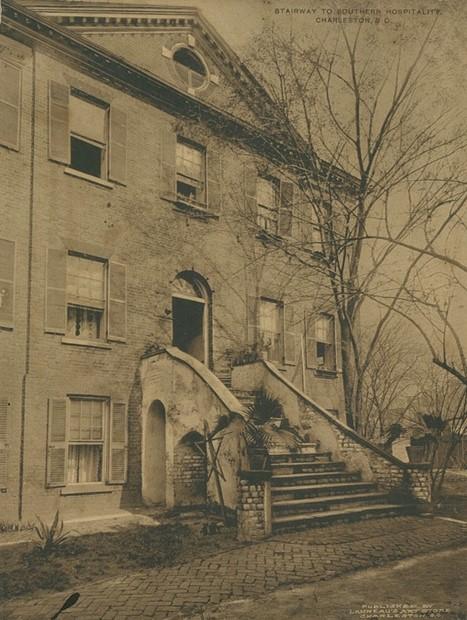
The Guenveurs raised their five children in the home and established a successful plumbing company, which, in 1964, was believed to be the oldest plumbing contracting company in the city. The home remained in the family for nearly eight decades before it was purchased by the College of Charleston in 2006.</em></strong></p><p><p class="xmsonormal">Originally constructed in 1772, then reconstructed in 1884 by John H. Kornahrens as a two-story Charleston Single House using its original timber, 57 Coming Street tells the story of a once thriving African American community. This dwelling was home to the Guenveur family for nearly eight decades before being acquired by the College of Charleston. Descended from free people of color in Charleston, the Guenveurs were a middle class family that were a part of robust and integrated <a href="https://discovering.cofc.edu/tours/show/9" title="Black Harleston Village tour">Harleston Village</a>, a south of Calhoun Street neighborhood. Harleston Village stretched from King Street on the east to the Ashley River and Broad Street to the south.</p>
<br />Edward Leon Guenveur Sr. was born in Charleston’s 3rd Ward (Vanderhorst Street) in 1892 to Joseph Paul Guenveur and Eugenia Florence Whiting. Joseph made a living as a carpenter and served as the superintendent of St. Peter’s Sunday School. He was also a state representative of the Colored Catholic Congress, which was a national organization. Affectionately referred to as Leon, he trained as an apprentice for ten years before earning the designation of Master Plumber. He started an independent plumbing company with his wife Lauretta serving as office manager thereafter. The business they operated at 57 Coming was responsible for installing indoor plumbing in many of the peninsula’s communities as new standards and technologies became available. Leon shared an enduring friendship with master blacksmith, Phillip Simmons. This is partly evidenced in the two wrought iron gates at the 57 Coming property. The main entrance to the home exhibits the more obvious gate, but a second smaller ironwork gate graces the lowest level of the home. Evidence from the Guenveur receipt books also suggests that Leon consistently worked with Thomas Pinckney,<a href="https://www.preservationsociety.org/thomas-mayhem-pinckney/"> known for his preservation work</a> throughout Charleston. Pinckney was specifically responsible for the restoration (1929) of the piazza entrance, the grated fireplaces with wooden mantels, and the exquisite front stairwell of the home.</p><p>Lauretta Goodall was born in 1894 to Emma Bell Goodall and Lindsey Baxter Goodall, clergyman of the Baptist church. Emma, like others in her family, learned to be a seamstress. Her mother, Maria Bell, was a laundress, then merchant and landlord. She acquired the properties at 27 and 29 St. Phillips Street in 1872. In the 1910 census, Emma is listed as a widow living with her two children (Lauretta and Baxter) at 27 St. Philip Street. The properties were held by the Goodall-Guenveur family for almost a century. The College of Charleston purchased and demolished the homes and the lot is now the present location of the Thaddeus J. Street Education Center (25 St. Philip Street). Lauretta and Leon were part of an intergenerational African American community. They both attended and graduated from the <a href="https://discovering.cofc.edu/items/show/69?tour=8&amp;index=0">Avery Normal Institute</a>, Lauretta in 1915 and Leon in 1911. The Avery Normal Institute was the first secondary school for African Americans established in Charleston. Lauretta trained as an educator while attending Avery and learned dressmaking and fine handwork at Essie Boston’s Fine Dress Shop. She offered private dressmaking services until she married in 1920.</p><p>The Guenveur children (Florence Louise, Helen Marie, Anna Mae, Edward Jr., and Loretta Ruth) attended Immaculate Conception (200 Coming Street) for grammar and high school, where the Oblate Sisters of Providence, the first successful Roman Catholic sisterhood in the world established by women of African descent, offered an exceptional education. The family attended <a href="https://discovering.cofc.edu/items/show/50">St. Peter’s Catholic Church</a> until it was shut down and the black parishes consolidated in 1967. Memorial bricks honor their departed family members at St. Patrick’s Catholic Church on 134 St. Philip Street, which housed a white congregation before then. The children had access to the library collection, enrolled in music lessons, and played sports at nearby Dart Hall Branch Library (19 Kraacke Street). In 2001, Florence recalled the Harleston Village of her youth. The family shopped at Tecklenburg’s Grocer on the corner of St. Phillip and Wentworth Streets and were neighbors to families that are still recognizable in Charleston: Sotilles, Steinbergs, Lawtons, and Bullards. She recalls Mr. Horry, a butcher on Spring Street and the Daniels, who were related to the founder of <a href="Jenkin%E2%80%99s%20Orphanage%20https%3A//discovering.cofc.edu/items/show/25">Jenkins’ Orphanage</a>.</p><p>Within an eight-block radius, African Americans in the Harleston neighborhood also could go to school, attend church, find haircare, entertainment, and shop. The segregated <a href="https://discovering.cofc.edu/items/show/21?tour=2&amp;index=7">Lincoln Theatre</a> was a brisk walk away at 601 King Street. Despite being barred from other stores and shops, African Americans were allowed to shop at Condon’s, Furchgott’s and Kerrison’s, stores also located on King Street. The <a href="https://discovering.cofc.edu/items/show/17">Beauty Box and Buchanan Barber College</a>, both established by Laura Mack Buchanan Sims, were nearby at 87 and 89 Coming Street, and the Brown Fellowship Cemetery, where many buried and visited their dead, was at 52 Pitt Street. These properties are among the Harleston Village real estate acquired by the College over the last half century. <br />As a master plumber, Leon provided an essential service for his neighbors and the City of Charleston. Testimony from his daughter, Dr. Florence Louise Guenveur Streat, suggests that he and his wife provided services for payment in kind for elderly clients and religious institutions. The family, in fact, was dedicated to improving the entire community through service and education. Leon founded the Owls’ Whist Club, a fraternal organization for African American businessmen, in 1914, with his brother, Joseph Paul Guenveur Jr and 14 friends. Lauretta was a founding member of the Entre Nous Bridge Club, in 1924. While they had college aspirations for their five children, none of them could attend the College of Charleston or even walk through the campus until it was integrated in 1967.</p><p>The living descendants recall how the five siblings had to walk around the perimeter of the College to get to the grocer, instead of simply cutting directly through the campus. Despite the Jim Crow segregation of the time, the Guenveur family drew inspiration from their proximity to the expanding College of Charleston. Leon and Lauretta valued education and cultivated this love for learning in their children. The siblings attained post-secondary educations at Historically Black Colleges and Universities (HBCUs) and went on to excel in their professional lives.</p><p>Dr. Helen Guenveur Smith was a pioneering dentist and community activist. In 1954, she married Attorney Sherman W. Smith Sr. After moving to Los Angeles, the couple built the historic Palm Vue Motel, where "people of all races are welcome." In Berkeley, she started her 50 years of private dental practice. She was a founder of the Watts Health Foundation, providing dental services there for two decades. Her husband served on the Superior Court bench in California.</p><p>Dr. Florence Louise Streat, a philanthropist and professor at Bennett College, was named the United Negro College Fund’s Outstanding Faculty in 1984. She married William Streat Jr., a Tuskegee Airman officer who became the second minority person registered to practice architecture in North Carolina. He served as Professor and Chairman of the Architectural Engineering Department at North Carolina Agricultural and Technical State University from 1949 until his retirement in 1985. The Streats met in Greensboro and were married in 1950 in the front parlor of 57 Coming. After her father passed away in 1969, Dr. Streat and her husband cared for the house. Mr. Streat was instrumental in the historic preservation of the home winning, in 1973, a Carolopolis Award from the Preservation Society of Charleston. Dr. Street was also instrumental in the preservation of St. John Cemetery.</p><p>Mrs. Anna Mae Guenveur Newman and Mrs. Loretta Ruth Mikell both graduated from Bennett College and had long careers as elementary school teachers in southern California. Loretta Ruth married Rollins J. Mikell Jr. The two were classmates through their entire matriculation at Immaculate Conception. He became a Computer Systems Specialist with a degree in Mathematics from North Carolina A&amp;T. Edward Leon Guenveur Jr. served in the US Army during the Korean War and, like his father before him, became a successful businessman. All the children left Charleston to pursue their careers and raise families elsewhere, but returned regularly. Ten grandchildren, all born and raised in California, have contributed to their communities in education, as independent businesspeople, in the healthcare professions, and in the creative arts. Despite the geographical distance between Charleston and California, the generations have always been steeped in 57 Coming Street lore.</p><p>Helen’s children, Louise Angele Smith and Roger Guenveur Smith, have been particularly active in recognizing and upholding the family’s impactful and pioneering history in Charleston and maintain strong ties to the College of Charleston. Mr. Smith, an Obie-winning actor, director, writer, and frequent collaborator with Spike Lee, holds an undergraduate degree in American Studies and attended the Yale School of Drama. In addition to sustaining ties to his ancestral home, he has brought his passion for history and the stage to the College by leading a Performing History Workshop for students in the Avery Research Center for African American History and Culture in 2011. Almost exactly a century before, Lauretta and Leon had earned their diplomas from the Avery Normal Institute.</p><p>In 2000 the Guenveur siblings endowed a scholarship at the College of Charleston in memory of their parents and the value they placed on work ethics and education. In 2001, Louise Guenveur Streat and Roger Guenveur Smith each received an honorary doctorate of humane letters from the College. Roger gave the commencement speech at the Graduate School ceremony that year. Notwithstanding being barred from admission to the College based on race, the Guenveurs modeled the behavior they believed in—sharing one’s resources and encouraging excellence in one’s community. The E<a href="https://today.cofc.edu/2023/01/06/guenveur-scholarship-continues-to-make-a-difference-in-the-neighborhood/">dward Leon Guenveur Sr. and Lauretta Goodall-Guenveur Endowed Memorial Scholarship</a> is awarded to a College of Charleston senior, from Charleston County, who maintains the highest academic average during the first three years of matriculation.</p><p>The College of Charleston Foundation acquired the property in 2004 through a sale from the family. Dr. Streat generously supported the adaptation of the family home for faculty use. The Foundation subsequently sold the property to the College. The site was dedicated as the Edward Leon Guenveur House and Lauretta Goodall Guenveur Garden on April 28, 2006. It currently houses the Department of Psychology. Inside the historic house are displayed books read by the family, family photographs, and even one of Mr. Guenveur’s plumbing tools which is symbolic of the family’s philosophy.</p><p>Louise Smith and Roger Guenveur Smith, the children of Dr. Helen Guenveur Smith, are committed to the upkeep of their family legacy and work directly with the College to preserve the history of the neighborhood they knew as their ancestral homeplace. Louise and Roger visit Charleston occasionally, dropping by the family home for nostalgic reflection and renewal. Some of the memorabilia from the family home is archived at the Avery Research Center for African American History and Culture. The home and garden serve as a sanctuary for faculty, staff, and students. The history of the home and of the Guenveur family is a vital reminder that African American history and culture are integral to the College’s story.</p></p><p><em><strong><a href="https://discovering.cofc.edu/redirect/items/show/70">For more (including 15 images), view the original article</a>.</strong></em></p><p><br><small>Find us on <a href="https://www.facebook.com/collegeofcharleston">Facebook</a> and <a href="https://twitter.com/cofc">Twitter</a></small></p>]]></summary>
    <published>2023-05-08T14:29:02+00:00</published>
    <updated>2025-01-29T17:33:25+00:00</updated>
    <link rel="alternate" type="text/html" href="https://discovering.cofc.edu/redirect/items/show/70"/>
    <id>https://discovering.cofc.edu/redirect/items/show/70</id>
    <author>
      <name>Kameelah L. Martin</name>
    </author>
  </entry>
  <entry>
    <title type="html"><![CDATA[Avery Research Center – A community hub providing education and advocacy ]]></title>
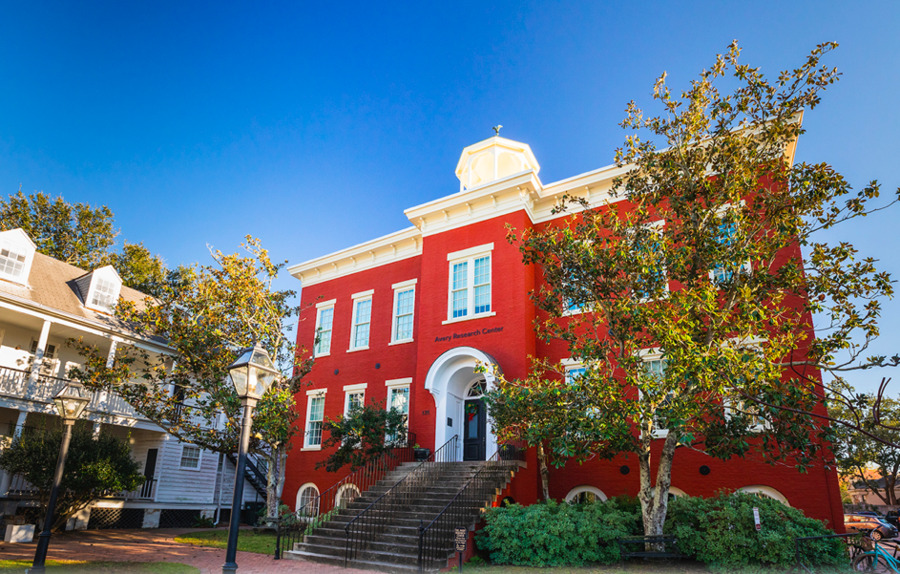
    <summary type="html"><![CDATA[<p><img src="https://discovering.cofc.edu/redirect/files/fullsize/af602cf1d6b56c13af6c2df8488b353b.jpg" alt="Avery Research Center for African American Culture" /><br/><p><strong><em>To understand the Avery Research Center for African American History and Culture, it is important to consider its rich history. </em></strong></p><p>To understand the Avery Research Center for African American History and Culture, it is important to consider its rich history. Founded in 1865 as the Avery Normal Institute, this community hub provided education and advocacy for the growing Charleston African American community and trained Blacks for professional careers and leadership roles. Although the Institute closed its doors in 1954, its graduates preserved the legacy of their alma mater by establishing the Avery Institute of Afro-American History and Culture (AIAAHC). </p><p><a href="https://today.cofc.edu/2022/01/27/the-late-lucille-whipper-was-a-model-citizen/">Avery alum Lucille Whipper</a> worked with Margaretta P. Childs, a white archivist for the City of Charleston, and various other supporters to organize efforts to acquire the Avery building. The AIAAHC formed in 1980 with a mission to obtain and preserve the former Avery Normal Institute building as an archival repository and museum to promote Black history and culture in the Lowcountry. Whipper became the first AIAAHC president and launched a campaign that grew to involve dedicated Avery alumni, local volunteers, the College of Charleston, and state political leaders. </p><p>The modern rebirth of Avery began in 1985 with the establishment of the Avery Research Center for African American History and Culture at the College of Charleston. The newly christened center came to fruition through a memorandum of understanding between the former Avery Institute and the College, with many of the charter members graduates of the original Avery Normal Institute. The ribbon cutting and grand opening was held on October 6, 1990. Dr. Myrtle G. Glascoe was the first director of the Avery Research Center, and she served in this role for eight years. Dr. Glascoe’s signature work during her tenure at the Avery Research Center included highlighting Gullah history and culture and fusing important Avery Research Center/Lowcountry African Diaspora links by connecting the ancestral dots between people of the Lowcountry and Sierra Leone, West Africa. Attendees of the ribbon cutting ceremony heard from Sierra Leonean educator and diplomat Dr. George Carew. </p><p>Over the years, the Center’s mission and vision has been stewarded by Dr. Marvin Dulaney, Dr. Karen Chandler, Ms. Georgette Mayo (interim), Dr. Patricia Williams Lessane (now Dr. Patricia Williams Dockery), and Dr. Tamara Butler. For the last thirty years, the Avery Research Center has collected books, art, and archival materials that document the history, traditions, and legacies of African Americans and their influence on American society and culture, as well as their place within the American narrative. The Avery Research Center also regularly hosts public programs, conducts educational outreach activities, and displays exhibitions for thousands of local, national, and international visitors.</p></p><p><em><strong><a href="https://discovering.cofc.edu/redirect/items/show/69">For more (including 10 images), view the original article</a>.</strong></em></p><p><br><small>Find us on <a href="https://www.facebook.com/collegeofcharleston">Facebook</a> and <a href="https://twitter.com/cofc">Twitter</a></small></p>]]></summary>
    <published>2023-05-08T14:28:27+00:00</published>
    <updated>2023-06-08T20:52:24+00:00</updated>
    <link rel="alternate" type="text/html" href="https://discovering.cofc.edu/redirect/items/show/69"/>
    <id>https://discovering.cofc.edu/redirect/items/show/69</id>
    <author>
      <name>Aaisha Haykal and The College of Charleston&amp;#039;s Avery Research Center for African American History and Culture</name>
    </author>
  </entry>
  <entry>
    <title type="html"><![CDATA[The Unveiling of “Saint Septima”  – African American Icon]]></title>
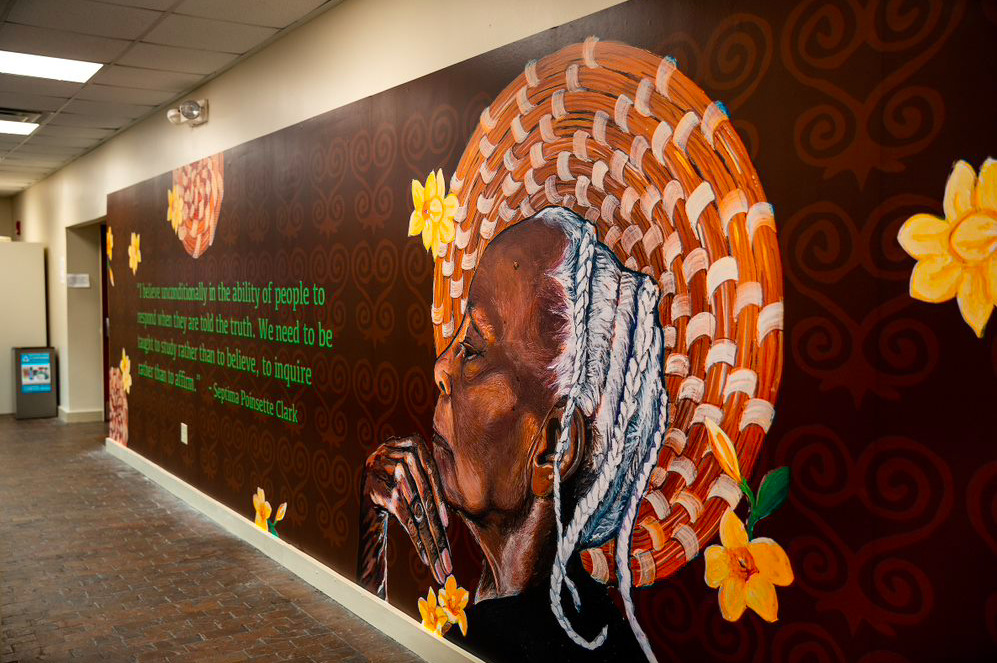
    <summary type="html"><![CDATA[<p><img src="https://discovering.cofc.edu/redirect/files/fullsize/1206a4b8800dc9f6e1f21d03ef2a4e24.jpg" alt="Mural, “Saint Septima,” Education Center Atrium, College of Charleston." /><br/><p><strong><em>As a tribute to Clark’s life, a 30-foot mural was installed in 2023 beside the Septima Clark Auditorium. The mural, based on Natalie Daise’s “Saint Septima with Carolina Jasmine,” is also a call to action.</em></strong></p><p>Sweetgrass and Carolina jasmine let us know that we are, indeed, in the Lowcountry. But the presence of Septima Poinsette Clark—composed, serene, contemplative—now in the halls of the College of Charleston’s Education Center reminds us of something more profound: our moral imperative to pick up the mantle of the yet-unfinished freedom struggle, both in the Lowcountry and in the world writ large. The new mural of Septima Clark, installed by the Committee on Commemoration and Landscapes in February 2023, celebrates her work as an educator and civil rights organizer, but it also calls for us to follow in her footsteps and be better for it. </p><p>
I recently spoke to Natalie Daise, the artist who designed the mural that now graces the Education Center’s walls. She told me that she had kept a copy of Brian Lanker’s book, I Dream a World: Portraits of Black Women Who Changed America, for years before Lanker’s stunning photograph of Clark, which appears on the book’s cover, inspired the first portrait in her Sweetgrass Saints series: “Saint Septima.” Daise’s portraits in acrylic and gold leaf honor African American icons in the Lowcountry, from Septima Clark and Robert Smalls to Harriet Tubman and Charlotte Forten. Behind each icon Daise paints halos of woven sweetgrass, and the portraits are adorned with starlit skies, doves mid-flight, and flowers that cascade from the heavens. These are saints, not merely in the Catholic sense of the word, but because of their moral stands against oppression—the path to liberation was not easy (far from it), but it was righteous. </p><p>
Daise gravitates to painting portraits out of a love for hearing and telling stories: “so many stories are stored in the fold of an eyelid and the curve of a lip. And I love hands—how they store potential energy that might spring any moment into action.” In “Saint Septima,” Daise captures the depths of Clark’s grace and power—her chin lightly rests on her fingertips, her head is held high, her eyes look to what is coming up ahead with the kind of quiet resolve that embodies what James Baldwin once told Nikki Giovanni: “What you have to do is make it possible for others to live. You know, that’s the only reason to be here.” Each of Daise’s brushstrokes felt, she said, “like meditation,” a testament to her sensibilities as an artist but also her admiration and gratitude for her ancestors who made it possible for her to live, in the deepest sense of what it means to live and to be.  </p><p>
When I first saw Lanker’s photograph of Clark and then Daise’s painting and mural, I thought about Kara Walker’s art, in particular her disturbing, large-scale installations of scenes from the antebellum South rendered in black silhouettes. This resonance was merely a matter of form, however. Walker’s silhouettes are, as she puts it, a “blank space that you [can] project your desires into.” Though Lanker and Daise depict Clark in profile, unlike Walker’s silhouettes, many of which are also done in profile, Clark is no empty vessel or black void. Clark refuses that void. She, in her quiet dignity, lets us know unequivocally who she is and the legacy she has left to us. She inspires us to imagine a more just and beautiful world. She shows us that we can dismantle systems of oppression that harm so many people for the benefit of the most powerful among us. For this reason, the installation of this new mural is not merely a cosmetic change to the campus. It is not just a thing of beauty. It is a vital and necessary reminder of what we, as a campus, as a nation, as citizens of the world, can become.  </p></p><p><em><strong><a href="https://discovering.cofc.edu/redirect/items/show/68">For more (including 5 images), view the original article</a>.</strong></em></p><p><br><small>Find us on <a href="https://www.facebook.com/collegeofcharleston">Facebook</a> and <a href="https://twitter.com/cofc">Twitter</a></small></p>]]></summary>
    <published>2023-02-20T16:22:47+00:00</published>
    <updated>2025-01-24T21:12:56+00:00</updated>
    <link rel="alternate" type="text/html" href="https://discovering.cofc.edu/redirect/items/show/68"/>
    <id>https://discovering.cofc.edu/redirect/items/show/68</id>
    <author>
      <name>Mari Crabtree</name>
    </author>
  </entry>
  <entry>
    <title type="html"><![CDATA[Belonging: College of Charleston Honors Septima Clark, 1978-2020s – Honoring a Visionary]]></title>
    <summary type="html"><![CDATA[<p><img src="https://discovering.cofc.edu/redirect/files/fullsize/732ff0a2dabfcb6375faaaaa62340bbd.jpg" alt="Cistern Yard at night, 2020s." /><br/><p><strong><em>C of C, which once excluded Black citizens, awarded Clark an honorary doctorate in 1978. It now safeguards her papers at the Avery Research Center. Dr. Clark’s life provides lessons for the College and inspiration for all who work for justice and equity.</em></strong></p><p>In the Cistern Yard in 1978, the College of Charleston presented an honorary doctorate to a woman whose father had been enslaved by one of its trustees. &quot;I cannot describe how I felt when they notified me of my nomination to this honor,” Clark told a reporter. “It was like being Cinderella. . . just after she puts on her glass slipper. After all, this is the same college the campus of which I have passed so often, not being allowed to enter it as either a student or a teacher.” </p><p>
Conferring this honor upon Clark was one of the College’s efforts to undo its past practices of exploiting and excluding African-descended people, practices that dated back to the institution’s beginnings. Wealth derived from enslaved people founded the College, starting with the first bequests the College received in 1770. Historic Randolph Hall was built using enslaved labor. For most of its history, the College had excluded Black citizens from its classrooms. In the 1940s, Avery students, including future State Representative Lucille Whipper, had written the College to request applications, but were told they were not eligible to apply to this public school supported by all taxpayers. In 1949, the city of Charleston sold the College to the Board of Trustees for one dollar so it could become a private school and continue excluding Black students. In the 1950s and 1960s, some students, including Frank Sturcken, protested, but the College did not accept Black students until 1967. </p><p>
In 1972, to support Black students, President Ted Stern hired Lucille Whipper to work at the College. The first Black faculty member, Owilender Grant, was hired in 1972; the second Black professor hired was Eugene Hunt, an Avery graduate who had previously taught at Burke High School, where he supported students who participated in the Charleston civil rights movement. Professor Hunt developed the College’s first African American studies courses in the 1980s. He also worked, along with Lucille Whipper, to establish the Avery Research Institute for Afro American Culture in 1985. This 1860s building, where Septima Clark had studied and worked in the 1910s, was restored as the Avery Research Center and opened to the public in 1990. Clark’s papers are now housed there. </p><p>
Clark passed away in 1987. A few months later, the College named the Septima Clark Auditorium in her honor. Despite this institutional recognition, many twenty-first century College of Charleston students were unfamiliar with the legacy of the activist who was born at 105 Wentworth Street, on the College’s campus. Some of the College’s Teaching Fellows, studying Clark in Professor Jon Hale’s Foundations of Education class, were shocked there was no marker at Clark’s birthplace. These students raised funds and submitted paperwork necessary to install a State Historical Marker on the site, where it was unveiled in 2018, on Clark’s 120th birthday. Grandchildren in attendance recalled their years with “Mama Seppie.” Charleston’s Poet Laureate Marcus Amaker read his poem, “Movement’s Mother.” <br />
Charleston’s poinsettia <br />
was a warrior woman <br />
who blossomed <br />
despite an unholy city’s <br />
unsettled winds. </p><p>
The Avery Research Center has now digitized many of Clark’s papers. Some are featured in an online exhibit on the College’s Lowcountry Digital History Initiative. Philanthropist Linda Ketner created a scholarship named for Clark and Esau and Janie Jenkins in 2022. The College installed a permanent exhibit on Septima Clark’s life in the Septima Clark Auditorium in 2023, linked to this online tour, so that more students would know of Clark’s achievements and their links to the College and surrounding neighborhoods. </p><p>
Dr. Clark once wrote, &quot;We need to be taught to study rather than to believe, to inquire rather than to affirm.” In this spirit, the College strives to teach students to think for themselves.</p><p>
Racism and systemic inequities continue to damage American society, a century after Clark’s activism began. In 2015, a young white supremacist massacred nine members of the Emanuel AME church, steps from the site of Clark’s old Henrietta Street home. In the wake of the massacre, Google commissioned a 2016 study by the Avery, which documented significant disparities between Black and white residents’ income, health, education, and housing. </p><p>
In May 2020, after George Floyd and other Black citizens were murdered by law enforcement, protestors in Charleston and the nation took to the streets, calling for Black lives to be valued. Septima Clark would have supported these protests and other efforts to make American society more equitable. &quot;I just tried to create a little chaos,” she said of her activism. “Chaos is a good thing. God created the whole world out of it. Change is what comes of it.&quot; </p><p>
Change can be chaotic and frightening. It can disrupt habits and traditions that seem unchangeable. But visionaries like Clark can inspire us to overcome our fears and our complacency. If we continue to study and inquire, as Septima Poinsette Clark did before us, we too can find ways to transform and heal a troubled world. </p></p><p><em><strong><a href="https://discovering.cofc.edu/redirect/items/show/67">For more (including 7 images), view the original article</a>.</strong></em></p><p><br><small>Find us on <a href="https://www.facebook.com/collegeofcharleston">Facebook</a> and <a href="https://twitter.com/cofc">Twitter</a></small></p>]]></summary>
    <published>2022-11-06T15:44:43+00:00</published>
    <updated>2023-06-08T20:57:17+00:00</updated>
    <link rel="alternate" type="text/html" href="https://discovering.cofc.edu/redirect/items/show/67"/>
    <id>https://discovering.cofc.edu/redirect/items/show/67</id>
    <author>
      <name>Julia Eichelberger and Committee on Commemoration and Landscapes</name>
    </author>
  </entry>
  <entry>
    <title type="html"><![CDATA[Service: Septima Clark&#039;s Continuing Influence, 1970-1980s]]></title>
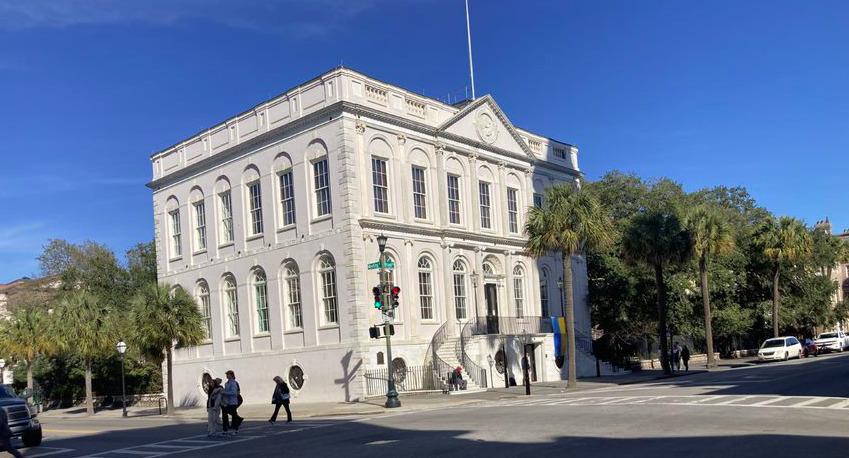
    <summary type="html"><![CDATA[<p><img src="https://discovering.cofc.edu/redirect/files/fullsize/1dafde6f3be599f34fa2d2ddd3a39572.jpg" alt="Charleston City Hall, 80 Broad Street, 2023" /><br/><p><strong><em>At Charleston’s City Hall in 1980, Septima Clark, an acknowledged leader in Charleston, swore in Mayor Joseph P. Riley for his second term. Now famous, Septima Clark continued to question the status quo and work for justice, encouraging other activists, especially women and young people, to do likewise.</em></strong></p><p>Septima Clark continued addressing injustice and poverty throughout the 1970s and 80s. By this time, more people in her hometown recognized the value of her activism. “People were so afraid of me before,” Clark told an interviewer in 1976. “Now my preacher talked about me one Sunday. He was talking about things going different with God, and he mentioned my name.” Joseph P. Riley amplified this recognition by inviting Clark to mark the beginning of his second term as mayor, having once again been elected by a coalition of Black voters and white progressives. In January 1980, Septima Clark was now one Charleston’s most prominent Black leaders. The daughter of a former slave, she administered the oath of office to the city’s mayor on the steps of City Hall, a structure enslaved labor had helped to build in the early 1800s. </p><p>
Since retiring from the Southern Christian Leadership Conference in 1970, Clark had continued to work on local issues, including public health, food stamps, and day care to support working families. In 1974 she was elected to the Charleston County School Board, the same body that had fired her in 1956. As a Board member, she advocated for Black teachers and students whose needs were not always recognized by white Board members or in curricular materials. When the Board reviewed a booklet on American government in 1981, Clark noted that no Black people were represented there. “I wanted to know who the black children would have to look up to in that book,” she said. “There was nothing in there that would help black children to feel that they had a right to the tree of life, and I know how important that is.&quot; </p><p>
Clark continued, “Our children. . . also need to know how change comes about. You have to develop them to do their own thinking and not accept unjust things but break through those things and change them. . . . There is a young [teacher] who has been talking to her children about standing up for their rights, and her name is on the list to be terminated. I don’t want to miss that meeting Monday, because I’m going to vote on her to stay in that school. [. . .] They’re going to try to fire her, but I’m going to fight them.” </p><p>
Although she was never wealthy and sometimes short of funds, Clark continued to give financial assistance to many young people, believing that if she did not, she “might refuse the very one who’s going to do well.” When Johns Island activist Bill Saunders asked Clark for help finding a room downtown for his daughter, a College of Charleston student, Clark offered to share her own bedroom. She also continued caring for family members. Her “grands” sometimes lived with her, including a grandson with disabilities. “My son’s grandmother kept him, so I had his little boy,” she said. Her financial challenges were slightly eased in 1976 when the state of South Carolina began paying Clark the pension she would have received if she had not been unjustly fired in 1956. In 1981 the state paid her another $15,000, half of the pension Clark would have received in the twenty years following her dismissal. </p><p>
Clark became a more public supporter of feminism during her retirement. “I think the civil rights movement would never have taken off if some women hadn’t started to speak up,” she told interviewer Cynthia Stokes Brown. She knew that during that era, her own contributions had not always been recognized. In a 1976 interview, she recalled how often Rev. Ralph Abernathy had asked, &quot;why was Septima Clark on the Executive Board of the Southern Christian Leadership Conference? And Dr. King would always say, &#039;She was the one who proposed this citizenship education which is bringing to us not only money but a lot of people who will register and vote.&#039; And he asked that many times. It was hard for him to see a woman on that executive body.” </p><p>
Clark shared her wisdom in lectures on college campuses. “The greatest evil in our country today is not racism but ignorance,” she told Antioch College in 1970, adding, “I believe unconditionally in the ability of people to respond when they are told the truth.” Clark made it clear that to her, “the truth” included the country’s long history of systemic racism. In a 1975 essay, she commented further on this history. “Nothing that is Black and whole and alive in America can be fully comprehended apart from the endless white thrusts toward our exploitation, deracination, death and dismemberment,” she wrote. “Indeed, only then can we fully understand and celebrate the miracle of our continued vibrant living presence. Only then can we properly understand the nature of the dying among us.” </p><p>
Recognition continued during the 1970s and 80s. Across the country, people sought her out for interviews and lectures. President Jimmy Carter, South Carolina governor Richard Riley, and other national organizations bestowed awards upon Clark, whose activism had once been branded anti-American. “Now it has come to the place that [Charlestonians] see that the work I was doing was really worthwhile,” she told Brown in 1979. “I’m very glad that I had enough patience and enough of the non-violent philosophy within me that I could take it and not be bitter towards any of them. They were afraid, but I wasn’t,” Clark said, adding, “Some people here are still afraid.” </p><p>
Throughout her career, people had tried to intimidate Clark, but could not make her quit. “I have had a lot of things to happen to me and I had to live through it,” she reflected in 1981. “I’ve had policemen sent to my door looking for the fight. Pure harassment. I’ve had firemen sent to my door looking for the fire. Pure harassment. I’ve had people call and curse me over the telephone, and I would just say, “Thank you, call again.” I’d put the phone down and here would come another call. There were nights when I couldn’t sleep for that kind of thing.” Clark expressed her ongoing resolve and her hope for even more change in the future: “There were times when I felt discouraged, too, but I felt I had to go on. I could not do anything by quitting. A quitter received nothing. . . . I know I’m not going to live to see a black President, but I do hope in times to come there will be one.” <br />
</p></p><p><em><strong><a href="https://discovering.cofc.edu/redirect/items/show/66">For more (including 15 images), view the original article</a>.</strong></em></p><p><br><small>Find us on <a href="https://www.facebook.com/collegeofcharleston">Facebook</a> and <a href="https://twitter.com/cofc">Twitter</a></small></p>]]></summary>
    <published>2022-11-06T15:24:43+00:00</published>
    <updated>2023-06-02T19:57:34+00:00</updated>
    <link rel="alternate" type="text/html" href="https://discovering.cofc.edu/redirect/items/show/66"/>
    <id>https://discovering.cofc.edu/redirect/items/show/66</id>
    <author>
      <name>Julia Eichelberger and Committee on Commemoration and Landscapes</name>
    </author>
  </entry>
  <entry>
    <title type="html"><![CDATA[Persistence: Septima Clark Combats Poverty and Injustice, 1965-1970]]></title>
    <summary type="html"><![CDATA[<p><img src="https://discovering.cofc.edu/redirect/files/fullsize/712132eba1b96ff614478c8b1864f18c.jpg" alt="Hospital Workers Strike Historical Marker, 173 Ashley Avenue, 2023." /><br/><p><strong><em>Black hospital workers and their supporters protested unequal treatment at the Medical College on Rutledge Avenue. The Civil Rights and Voting Rights Acts were great achievements, but other problems remained. As a staff member for the SCLC, Septima Clark continued to fight racial discrimination and economic inequities.  </em></strong></p><p>The Medical College of South Carolina was one site where activism continued after the Civil Rights Act. In 1969, Septima Clark and the Southern Christian Leadership Conference (SCLC) supported the hospital workers’ strike here. Workers, primarily Black women, filled the streets along with their supporters, demanding better pay and working conditions. The Medical College president told reporters, “I just don’t believe it’s a civil rights issue.” To Clark and her colleagues in the SCLC, however, supporting the strike was a continuation of their ongoing work fighting for the rights and dignity of Black citizens. </p><p>
Since 1961, Clark had been on staff at the SCLC as it worked for desegregation and voting rights under King’s leadership. The SCLC shifted focus after the Voting Rights Act passed in 1965. States could no longer legally require citizens to interpret their state constitution to register to vote, and citizenship schools no longer needed to coach students to surmount this barrier. The SCLC got voters registered, encouraged voter turnout, and promoted programs sponsored by President Lyndon Johnson’s War on Poverty. People who had been trained in citizenship schools, like Ethel Grimball on Wadmalaw Island, began working in Head Start programs. The SCLC also publicized systemic inequities that prevented individuals from accumulating economic and social capital. As King began speaking out on these matters, some journalists and public officials criticized him, saying he was straying from the cause of desegregation, but King responded that poverty and lack of opportunity disproportionately affected Black Americans. </p><p>
King called for solutions to poverty in a speech he gave in Charleston in 1967. He was introduced by Johns Island activist Esau Jenkins, who had worked with Septima Clark to develop the citizenship school formula that registered many new voters in the South. Before delivering the speech, King stopped at Septima Clark’s home to confer with local leaders. King then gave a speech to over three thousand people,  telling the crowd, “Emancipation for the Negro was freedom to hunger.” The War on Poverty, he said, was so underfunded that “it didn’t even end up a good skirmish.” King contended, “It’s possible to end unemployment, it’s possible to end poverty.” He also denounced the US’s war with Vietnam as “the most unjust war in the modern world and maybe in history.” (A recording of King’s speech is at the Avery Research Center.) </p><p>
In April 1968, King was assassinated in Memphis, where he was supporting striking sanitation workers. The next month, the SCLC went forward with the Poor People’s Campaign King had helped plan, a mass demonstration in Washington DC calling for more aid to America’s poor. Demonstrators from across the country began traveling to Washington in May. The “Southern Caravan” traveled from Mississippi through the South, including Charleston. Afterwards, the News and Courier’s editorial, “Behind the Marchers,” announced, “Suspicions of Communist influence in the Poor People’s March on Washington has received official attention.” The editorial suggested (incorrectly) that the march might culminate in an attack on the Capitol. Septima Clark&#039;s letter to the editor appeared the same day, praising everyone who worked together to keep the event running smoothly and feed the marchers as the caravan came through Charleston. “This was a Southern community problem and Southern community people worked on it,” she asserted. </p><p>
Community members, including Clark, continued addressing community problems in Charleston, problems that many whites were unaware of. Years later, Andrew Young recalled his experience in 1969 as an SCLC staffer: “It must have come as quite a shock to the white community when a few Black hospital workers attempted to organize a union at the South Carolina Medical College Hospital.” The hospital fired twelve workers they believed were leading the effort, causing 450 more to walk out in protest on March 19, 1969. As Young wrote later, the SCLC came to support the strike because it fit the SCLC’s “desire to combat fundamental economic inequities and was consistent with the long-term aims of the Poor People’s Campaign. In addition, in Septima Clark we had a staff person who knew intimately the personalities and tendencies of black and white leadership in Charleston.” </p><p>
The strike continued for months. South Carolina’s governor declared a state of emergency and a 9 pm to 5 am curfew,  and ordered 1,000 state troopers and National Guardsmen to patrol the city. Workers, family members, and students were arrested nightly at demonstrations held in defiance of the curfew. Coretta Scott King marched with the workers, was arrested, and addressed a mass meeting at Morris Brown AME church. The strike lasted 113 days, until the hospital promised to rehire the fired workers and use a new grievance process for resolving complaints. Some strikers said this was the first time they had received at least some recognition from the hospital. Momentum from the strike also spurred increased Black voter registration in Charleston. </p><p>
In 1970, in Charleston’s formerly segregated Francis Marion Hotel, Septima Clark was honored with a banquet where the SCLC celebrated her contributions to the civil rights movement.  Clark, age 72, was retiring from the SLCC, but was far from finished with her work as an outspoken activist, educator, and leader. </p></p><p><em><strong><a href="https://discovering.cofc.edu/redirect/items/show/65">For more (including 14 images), view the original article</a>.</strong></em></p><p><br><small>Find us on <a href="https://www.facebook.com/collegeofcharleston">Facebook</a> and <a href="https://twitter.com/cofc">Twitter</a></small></p>]]></summary>
    <published>2022-11-06T14:50:58+00:00</published>
    <updated>2023-06-02T19:56:45+00:00</updated>
    <link rel="alternate" type="text/html" href="https://discovering.cofc.edu/redirect/items/show/65"/>
    <id>https://discovering.cofc.edu/redirect/items/show/65</id>
    <author>
      <name>Julia Eichelberger and Committee on Commemoration and Landscapes</name>
    </author>
  </entry>
  <entry>
    <title type="html"><![CDATA[Courage: Septima Clark Inspires Nonviolent Resistance, 1960-1965]]></title>
    <summary type="html"><![CDATA[<p><img src="https://discovering.cofc.edu/redirect/files/fullsize/8d330e406ac8be8e2bb9fbc44021b06e.jpg" alt="Kress Building, 281 King Street" /><br/><p><strong><em>The Kress store in Charleston was one of many sites across the South where activists risked their jobs and their safety by protesting against segregation and registering Black citizens to vote. Many participating in the civil rights movement were inspired by Septima Clark’s citizenship schools.</em></strong></p><p>In 1960 on Charleston’s King Street, high school students challenged the longstanding Southern custom that Black citizens could not sit at lunch counters where whites were served. All across the South, similar scenes were playing out: Black customers would quietly “sit in” at a segregated restaurant, knowing they’d likely be arrested for allegedly trespassing or disturbing the peace. Angry white onlookers could become violent. Some of the Charleston students didn’t tell their parents they’d be protesting and facing jail; white employers might fire protestors or family members for their activism. </p><p>
While these sit-ins were occurring, Septima Clark was continuing to lead workshops and adult education classes for people who wanted to combat racial discrimination. These classes inspired some of their students to take the risk of resisting segregation. One famous protestor, Rosa Parks, took a class with Septima Clark. One famous protestor, Rosa Parks, had taken a class with Septima Clark. Before Parks refused to give up her seat to a white bus passenger in 1955, Clark had taught her in a workshop at Highlander Folk School, where other Lowcountry residents, Bernice Robinson and Esau Jenkins, were making plans for a citizenship school on Johns Island. During group discussions, Clark encouraged the shy Parks to share her struggles with segregation laws in Montgomery. As Clark later said of her approach to teaching, “I always felt that if you were going to develop other people, you don’t talk for them. You train them to do their own talking.” Parks decided to resist laws she once thought could not be changed. Her 1955 arrest triggered the Montgomery bus boycott, initiated by Jo Ann Robinson and led by 26-year-old Martin Luther King, Jr. </p><p>
Since 1957, Clark’s citizenship schools in South Carolina had thwarted the laws that were designed to prevent Blacks from voting there. Similar laws were in place across the South, and activists came to Highlander and to Johns Island to learn how to overcome voting barriers with their own citizenship schools. Septima Clark, an extraordinarily successful teacher and manager, was becoming a well-known figure who would be called “The Mother of Civil Rights Movement.” In 1960 her workshop influenced a group of students who formed the Student Nonviolent Coordinating Committee (SNCC) and planned the Freedom Rides. Traveling on buses through Southern states, Freedom Riders attempted to desegregate bus station waiting rooms and restaurants, often encountering white mobs waiting to attack them. </p><p>
“It was 1962 before the major civil rights groups were ready to do something about voter registration,” Clark later recalled. “But we had developed the ideas of the Citizenship Schools between 1957 and 1961. So all the civil rights groups could use our kind of approach, because we knew it worked.” In 1961, Martin Luther King, Jr.’s Southern Christian Leadership Conference (SCLC) recognized the power of the citizenship schools program. The SCLC hired Clark to work with staff member Andrew Young to go to more communities in the Deep South, recruiting and training local people to start their own schools. </p><p>
Citizenship schools were a crucial component in civil rights activism. “One time I heard Andy Young say that the Citizenship Schools were the base on which the whole civil rights movement was built,” Clark reflected years later. “And that’s probably very much true. . . because the Citizenship Schools made people aware of the political situation in their areas.” Adults who had been excluded from many aspects of modern life grew more confident as they developed their reading and writing skills and could register to vote, pay their own taxes, read the Bible or write family members. They studied the laws of their state and of the United States, learning what rights all citizens are entitled to. Their newfound knowledge helped them register to vote, but also helped them analyze issues and decide how to participate in their communities. In 1962, as the program gained momentum, Clark wrote, “It is evident that we now have within our grasp a new kind of society, a learning society made up of educative communities.” </p><p>
By 1965, 25,000 students had participated in the Citizenship Schools, taught by 1,600 teachers trained by the SCLC’s program. More than 50,000 new Black voters were registered in the South. As Martin Luther King put it in his “I Have a Dream” speech, “Now is the time to make real the promises of democracy.” To Clark, literacy was not just the ability to read, but also the ability to analyze and interpret one’s society. Educated citizens took these civic lessons to heart. Clark wrote in 1964, “There are many ways to communicate injustices to the American public. These dramatic confrontations were necessary to educate white people in Savannah, Georgia and to make Negroes free enough to vote wisely and speak out. . . Literacy means liberation.” </p><p>
Across the South, thousands joined in civil rights protests and demonstrations. Charleston teenagers sat in at the Kress lunch counter, a block from the College of Charleston. They participated in demonstrations,  mass meetings, King Street store boycotts, and the desegregation of the municipal golf course. A few brave students, such as Millicent Brown, began the lonely process of desegregating Charleston’s all-white public schools. (The College of Charleston remained all-white, having become a private school in 1949 to avoid complying with federal requirements for integrated public schools.) Elsewhere, police with billy clubs and snarling dogs attacked protestors who were marching or trying to register to vote. Violence could kill or maim protestors, who did not fight back. They were arrested, beaten, shot, and firebombed. “I was in a Baptist church in Grenada, Mississippi,” Clark recalled years later. “We were talking about registration and voting; we were going to show them how to fill in these blanks. Just as we finished up that meeting and walked out of church, it caught fire in every corner. . . This just shows how mean people can be.” </p><p>
When the American public saw nonviolent citizens facing violence for exercising their citizenship rights, it became clearer that segregation, allegedly “the Southern way of life,” was not a peaceful local custom, but an inherently violent system.  By 1964, the movement was beginning to change the country. Congress passed President Lyndon Johnson’s Civil Rights Act, banning racial discrimination in federally funded programs and in public accommodations. King was awarded the Nobel Peace Prize, and Clark traveled to Norway with other leaders to see him receive the award. </p><p>
More dangers awaited civil rights activists. They continued getting into what John Lewis would later call “good trouble,” facing danger and arrest while exposing the flaws of an unjust society. Lewis and other peaceful demonstrators paid a high price for their ideals on “Bloody Sunday” in Selma, Alabama in March 1965, when crowds marching across the Edmund Pettus Bridge were brutally beaten by police as the world watched on television. Shortly thereafter, Congress passed the Voting Rights Act that eliminated many barriers to voting. Great strides had been made, but Clark and other activists knew their work was not done. More advocacy and more citizenship education would be needed for people to address their communities’ problems. </p></p><p><em><strong><a href="https://discovering.cofc.edu/redirect/items/show/64">For more (including 11 images), view the original article</a>.</strong></em></p><p><br><small>Find us on <a href="https://www.facebook.com/collegeofcharleston">Facebook</a> and <a href="https://twitter.com/cofc">Twitter</a></small></p>]]></summary>
    <published>2022-11-06T14:25:19+00:00</published>
    <updated>2025-01-24T19:55:31+00:00</updated>
    <link rel="alternate" type="text/html" href="https://discovering.cofc.edu/redirect/items/show/64"/>
    <id>https://discovering.cofc.edu/redirect/items/show/64</id>
    <author>
      <name>Julia Eichelberger and Committee on Commemoration and Landscapes</name>
    </author>
  </entry>
  <entry>
    <title type="html"><![CDATA[Leadership : Septima Clark&#039;s Faith Helps Change the Lowcountry, 1954-1964]]></title>
    <summary type="html"><![CDATA[<p><img src="https://discovering.cofc.edu/redirect/files/fullsize/536c7a1273a5f38fc93a857c07796eec.jpg" alt="Old Bethel United Methodist Church" /><br/><p><strong><em>Inspired by her faith, Clark worked with Bernice Robinson and Esau Jenkins to develop a “citizenship school,” teaching Black adults on Johns Island to read, register to vote, and become active citizens. The program spread across the Lowcountry. </em></strong></p><p>In 1956 Septima Clark began working full-time at Highlander Folk School, and in 1961, took a job with the Southern Christian Leadership Conference. During these years she maintained her membership at Old Bethel United Methodist Church, a few steps from the College of Charleston. Clark regarded her activism as an extension of her Christian faith. As she stated in a 1964 essay, “Where there is obedience to the gospel, there will be concern for the less fortunate. . . The Christian can never be content with token progress by a fortunate few.”</p><p>
While her activism now extended across the South, Clark  continued to support her Charleston congregation. A 1964 letter to Bernice Robinson closes, “Please put this contribution in church for me next Sunday.” The rest of Clark’s letter reported on the progress of an innovative program teaching Black adults to read, write, and register to vote. “I’m enjoying the work. It’s challenging,” Clark wrote Robinson.</p><p>
The work was a “Citizenship School” program that changed the Lowcountry and eventually, the South. It was begun in the 1950s by Clark, Robinson, and Johns Island native Esau Jenkins. The school was an outgrowth of the Progressive Club, a Black mutual aid society that provided community support, including legal aid for victims of racial violence. Throughout the South, white violence against Blacks often went unpunished, as in the notorious case of Emmett Till’s murder in Mississippi in August 1956: an all-white jury swiftly acquitted his killers, who later confessed to Look magazine. Violence also occurred in the Lowcountry; on Johns Island in the 1930s, a white man, after shooting a Black man for accidentally running over his dog, was not held accountable. The Progressive Club formed in response to this incident and other inequities on Johns Island. Government services available to whites, such as school bus transportation or access to a local high school, were not available to Black Johns Islanders. Those who could not read and write could not tell whether they were being cheated while making purchases or paying their taxes or insurance premiums.</p><p>
Esau Jenkins was determined to change things for his community. Few Black residents could vote and influence public policy; white officials controlled the voter registration process and would not let Black citizens register if they could not read or explain the state constitution. Jenkins and his wife Janie Jenkins ran a service transporting people to downtown Charleston, and as he drove, he conducted informal classes for his passengers, helping them learn what they’d need to know to register. On his VW van was the Progressive Club’s motto: “Love is progress. Hate is expensive.”</p><p>
In 1955, Clark, who had first met Mr. Jenkins when teaching on Johns Island in the 1920s, recruited him to attend a summer workshop she was directing at Highlander Folk School. They began developing plans for a citizenship school for Johns Island. Clark, Bernice Robinson and Jenkins recruited participants for their first classes, taught by Robinson, in January 1957. Highlander advanced Jenkins the funds to purchase an old school building, and the new school was soon underway.</p><p>
By 1958, other citizenship schools were formed, in North Charleston and on Wadmalaw and Edisto Islands. Two more soon opened on St. Helena and Daufuskie Islands. At these schools, adult students learned to read letters from relatives, fill out a money order form, determine how much tax they owed and pay it themselves. Hundreds of Black citizens were now able to register to vote. Some got Social Security benefits and developed skills needed to run their own businesses. In addition to classes, schools held meetings where people discussed current events, community needs, and how to address these needs.</p><p>
The school on Johns Island initially operated quietly--a grocery store at the front of the Progressive Club partly concealed the classes being held in the back room, which might have attracted more suspicion. Eventually, though, word of the schools spread, and the Charleston News and Courier began to write about them, noting that this form of citizenship might affect political leaders. A 1959 editorial warned, “Should a Negro bloc vote develop in the South. . . . white Southern politicians would seek it. The kind of politicians who court the Negro vote will not provide the best government for either race.” The editorial also suggested that the citizenship school might be a Communist organization. “White civilization. . . is in peril,” the editorial stated. It closed with a quotation intended to raise concern among white readers: “As Esau Jenkins said of integration, ‘It’s a revolution.’”</p><p>
The newspaper’s response was not uncommon. Many white in the Souths who wished to keep their society segregated believed proponents of integration were dangerous, anti-American Communists. Segregationists distrusted organizations like Highlander, whose workshops were integrated. In 1959, Tennessee officials, accompanied by photographers, staged a raid on Highlander while Clark was running a workshop there. Clark and several others were taken to jail and charged with possessing and selling whiskey. Photographs of Clark under arrest were published in newspapers, although she was later cleared of all charges.</p><p>
Highlander was forced to close temporarily in 1961, but soon reopened. The Southern Christian Leadership Conference decided to expand the citizenship schools program and hired Clark.  In the Lowcountry, citizenship schools continued serving local people, but also expanded their mission. People from other areas hoping to implement schools and empower citizens in their own communities came to Johns Island to be trained. The Lowcountry’s program had become a model for the rest of the country.</p></p><p><em><strong><a href="https://discovering.cofc.edu/redirect/items/show/63">For more (including 12 images), view the original article</a>.</strong></em></p><p><br><small>Find us on <a href="https://www.facebook.com/collegeofcharleston">Facebook</a> and <a href="https://twitter.com/cofc">Twitter</a></small></p>]]></summary>
    <published>2022-11-05T16:30:28+00:00</published>
    <updated>2025-01-24T20:14:47+00:00</updated>
    <link rel="alternate" type="text/html" href="https://discovering.cofc.edu/redirect/items/show/63"/>
    <id>https://discovering.cofc.edu/redirect/items/show/63</id>
    <author>
      <name>Julia Eichelberger and Committee on Commemoration and Landscapes</name>
    </author>
  </entry>
  <entry>
    <title type="html"><![CDATA[Allies: Crossing the Color Line with Septima Clark, 1947-1956]]></title>
    <summary type="html"><![CDATA[<p><img src="https://discovering.cofc.edu/redirect/files/fullsize/ff475e94ed23816bf5c7191aed226a76.jpg" alt="Coming Street YWCA, 106 Coming Street" /><br/><p><strong><em>Black women were leaders at the Coming Street YWCA. After returning to Charleston, Clark tackled community problems, working with Black women’s clubs and white allies who opposed segregation. When fired from her Charleston teaching job for belonging to the NAACP, she became director of workshops for activists at Highlander Folk School in TN.</em></strong></p><p>In 1950, Charlestonians were shocked by a speech made at the Coming Street YWCA, denouncing segregation. A well-known, affluent white woman named Elizabeth Waring delivered the speech. The ensuing backlash typified the growing resistance to a racially integrated society that Septima Clark and white allies encountered during the 1950s, within and beyond Charleston. </p><p>
After returning to her hometown in 1947, Ms. Clark found a job teaching the morning session at Archer Elementary School. (Schools for Black students in Charleston, like those in Columbia, were so crowded they had to hold double sessions.) Her afternoons were devoted to community service. Ms. Clark became president of the Gamma Xi Omega chapter of the Alpha Kappa Alpha (AKA) sorority, a service organization of Black collegiate women. She served as president of the city’s Federation of Colored Women’s Clubs and was chair of the Coming Street YWCA, the city’s Black branch, which provided recreation, kindergarten, and services for working Black women. </p><p>
In 1950, the Coming Street YWCA invited Elizabeth Waring to speak at its annual meeting. Many white Charlestonians hated Elizabeth Waring and her husband, Judge Julius Waties Waring, because of his court rulings--that South Carolina schools should equalize pay for Black and white teachers, that Black students should be able to attend a state law school, and that Blacks must be allowed to vote in Democratic primaries. Additionally, the Warings had fallen in love while married to others; Judge Waring’s first wife was a prominent Charlestonian. The scandal gave most whites another reason to despise the Warings, besides the couple’s outspoken opposition to white supremacy. </p><p>
When Charleston newspapers announced Elizabeth Waring would be speaking to a Black audience on Coming Street, members of the white Society Street YWCA were uneasy. Fearing controversy, the white Y members asked the Coming Street Y to disinvite Mrs. Waring. Instead of complying with this request, Septima Clark called on the Warings in their Meeting Street home and encouraged Elizabeth Waring to give the speech, which she did. Waring told the Coming Street Y audience that white Southerners were “sick, confused, and decadent people.” She urged Blacks to vote and stand up for their rights, saying, “You are building and creating. The White Supremacists are destroying and withholding.” Waring’s words seemed so radical that when Clark’s mother heard them at the event, she collapsed. </p><p>
Newspaper coverage of the speech heightened the animosity most whites felt for the Warings, but Septima Clark and other Black leaders became friends with the couple, who frequently invited them to dine at their home. Clark later mused that the Warings’ invitations may have improved her own standing among more affluent Blacks. In any case, these social events crossed a color line, since Blacks were expected to enter whites’ homes only as servants, never as guests. Clark was pleased when Elizabeth Waring accepted Clark’s invitation to tea at her Henrietta Street home, even though Mrs. Poinsette, mistrustful of whites, refused to come out of her room during the visit. Meanwhile, elected officials and white citizens continued calling for the Warings to leave the state. They did leave in 1952, moving to New York after threats and physical attacks on their Charleston home, but they remained lifelong friends with Clark and other Black leaders. </p><p>
Allies also were at work elsewhere in the South. In 1952 the director of the Coming Street Y, Ms. Anna Kelly, attended a workshop on school desegregation in Monteagle, TN at the Highlander Folk School, a training center for social activists. Kelly reported on the event to Clark, who went to Highlander in summer 1954. Clark was “really surprised” by this organization’s integrated workshops, at which “a white woman would sleep in the same room that I slept in, or eat at the same table.” Highlander’s grassroots approach to social change was in keeping with Clark’s philosophy of educating people to make their own decisions and fight their own battles. She recruited other Lowcountry leaders to attend Highlander, and in 1955, she was hired to lead summer workshops. At one workshop, two Black Lowcountry leaders, Esau Jenkins and Bernice Robinson, began planning an education center for illiterate adults on Johns Island--a “citizenship school” that would later become the model for programs across the South. </p><p>
In 1954, the Supreme Court ruled school desegregation unconstitutional in Brown vs. Board of Education, a case that included an NAACP lawsuit against a South Carolina school board. Few whites in the South supported this ruling; instead, most were horrified at another attack on segregation and white supremacy, which they called “the southern way of life.” South Carolina KKK chapters gained hundreds of new members at meetings patrolled by state troopers. Southern communities also formed all-white “Citizens’ Councils” to maintain segregation, albeit in less overtly violent ways. To the Charleston News and Courier, the Charleston Citizens’ Council contained “the best people,” but Charleston’s NAACP president Joe Brown called it “the tuxedo gang of the Ku Klux Klan.” </p><p>
In 1956, South Carolina barred city, county, or state employees from belonging to the NAACP. Many Black educators felt they had no choice but to withdraw their NAACP membership, but Clark and a handful of other teachers refused to do so. In May 1956, she was fired by the Charleston school district. She contacted hundreds of colleagues, asking them to protest, but only five showed up for a meeting at the superintendent’s office. Years later, Clark reflected, “I think I tried to push them into something they weren’t ready for. . . .You always have to get the people with you. You can’t just force them into things.” Other Black Charlestonians feared backlash if they supported Clark publicly. That December, when her AKA sorority held an appreciation dinner for Clark, only a few members would pose for a photograph with her. “If they had, they would have lost their jobs,” she recalled. </p><p>
Highlander hired Clark to work full-time as the center’s director of workshops in 1956. White allies at Highlander also faced opposition. State officials in Tennessee opposed the center because of its interracial, pro-integration gatherings, and they temporarily shut down Highlander in 1961. This setback did not stop Clark’s work. Instead, she began implementing another citizenship education program on behalf of Martin Luther King, Jr. and the Southern Christian Leadership Conference. </p></p><p><em><strong><a href="https://discovering.cofc.edu/redirect/items/show/62">For more (including 12 images), view the original article</a>.</strong></em></p><p><br><small>Find us on <a href="https://www.facebook.com/collegeofcharleston">Facebook</a> and <a href="https://twitter.com/cofc">Twitter</a></small></p>]]></summary>
    <published>2022-11-05T15:50:12+00:00</published>
    <updated>2023-06-02T19:54:16+00:00</updated>
    <link rel="alternate" type="text/html" href="https://discovering.cofc.edu/redirect/items/show/62"/>
    <id>https://discovering.cofc.edu/redirect/items/show/62</id>
    <author>
      <name>Julia Eichelberger and Committee on Commemoration and Landscapes</name>
    </author>
  </entry>
  <entry>
    <title type="html"><![CDATA[Activism : Pay Equalization and Septima Clark&#039;s Home, 1929-48]]></title>
    <summary type="html"><![CDATA[<p><img src="https://discovering.cofc.edu/redirect/files/fullsize/7cb895376a5830642f03a08f6646c458.jpg" alt="Site of 17 Henrietta Street. 11 Henrietta Street is visible at the left of the photo. " /><br/><p><strong><em>The Clark family lived on this block of Henrietta Street for decades before Clark could afford to buy a house. Living in Columbia, Ms. Clark developed skills as a teacher-activist and participated in the NAACP’s pay equalization campaign. As a result, her salary grew, enabling her to buy her family a home.</em></strong></p><p>Purchasing a house on Henrietta Street in 1948 was the fulfillment of a lifelong dream for the fifty-year-old Septima Clark. Since childhood, she’d wanted to give her parents a more comfortable existence. Clark would not have been able to buy this home, however, if court decisions in the 1940s had not changed South Carolina’s practice of paying Black teachers far less than their white counterparts. While in Columbia, Clark participated in the movement for pay equalization which would ultimately give her the opportunity to triple her salary. </p><p>
Before the movement succeeded, Clark supplemented her income by occasionally teaching evening classes in Columbia, a job that made her more adept at teaching adults to read and write. She taught in Richland County’s progressive Adult Schools program and, at Fort Jackson, worked with Black soldiers who could not sign their own paychecks. Her professional skills were also enhanced by an organization for Black teachers, the Palmetto State Teachers’ Association, whose members shared ideas and practical techniques. Moreover, PSTA believed in teaching students to become active citizens—informed participants in local governments. This was a bold and visionary attitude in a time when few Black South Carolinians were able to vote. When Clark attended large meetings of the PSTA, as she later recalled in her memoir, “we teachers had a visible demonstration of our importance, of what we already were; it didn’t take much to imagine what we might be.” </p><p>
Most PSTA members, like many other Black professionals in Columbia, would not risk their jobs by protesting against state laws. But Clark eagerly supported the NAACP when it challenged the state’s practice of paying lower salaries to teachers who were Black. The PSTA and others did not believe the NAACP campaign for salary equalization could succeed. Clark, however, went door to door recruiting new NAACP members, trying to convince community members and colleagues that they should pursue the issue. </p><p>
In a 1940 case (Alston vs. School Board of Norfolk), federal courts had ruled that “separate but equal” institutions must actually be equal. However, in South Carolina in 1942-43, white teachers’ average salary was twice what Black teachers earned ($1091 vs. $538). Clark helped document some of these inequities in Columbia. “I was able to get some affidavits from both white and black teachers about salaries and show the discrepancies.” In 1943, the NAACP sued the Charleston school board. Future Supreme Court Justice Thurgood Marshall argued for the NAACP; C of C graduate Harold Erckmann represented the school board. The Federal Judge hearing the case was C of C graduate J. Waties Waring, a prominent Charlestonian. He surprised everyone by ruling that the city must equalize its teachers’ salaries. </p><p>
In another NAACP lawsuit in 1945, Waring ordered Richland County to set a new salary schedule to equalize pay. In response, the state created a rating system for teachers based on their years of education and score on a state exam. Many Black teachers objected to the exam, which they felt might disadvantage teachers who hadn’t had a chance to complete college or graduate school (in that era, a teacher’s license did not require a college degree). Clark, who had earned a licentiate of instruction, but not a B.A., from Avery Normal Institute, had been taking additional college courses, which helped prepare her for the state teachers’ exam.  She had earned a B.A. (1942) and an M.A. (1946), and she’d received strong professional development training in the Columbia schools where she worked. She scored high on the exam, tripling her salary. </p><p>
Clark’s political activism, along with hard work and talent, increased her earning power. Although not wealthy, she could now afford a house for her Charleston family. As a child, when her father “didn&#039;t have money enough to buy a number of things that we needed, he would talk about how he hated that.” Clark&#039;s mother often told her children about wearing nicer clothes before she had children to support. “I can remember her singing those blues so well, talking about the things that she had, she&#039;d never have anymore. She hated it very much. But she did get to the place where she could have everything that she wanted. . . . I bought a house and I had it repaired, down on Henrietta Street, and the night that we had the opening, oh, she was most jubilant. . . . And she just threw her arms around me and said, ‘Nice, nice to do this.’” Clark had added a downstairs bedroom and bathroom so that her mother “wouldn&#039;t have to climb steps. . . That&#039;s what I did when I was able to. . . . She was too happy, but I was hoping that my father could have been alive. I would have liked for him to have been there at the time. But he was gone.” </p></p><p><em><strong><a href="https://discovering.cofc.edu/redirect/items/show/61">For more (including 7 images), view the original article</a>.</strong></em></p><p><br><small>Find us on <a href="https://www.facebook.com/collegeofcharleston">Facebook</a> and <a href="https://twitter.com/cofc">Twitter</a></small></p>]]></summary>
    <published>2022-11-04T00:02:21+00:00</published>
    <updated>2025-01-23T22:53:51+00:00</updated>
    <link rel="alternate" type="text/html" href="https://discovering.cofc.edu/redirect/items/show/61"/>
    <id>https://discovering.cofc.edu/redirect/items/show/61</id>
    <author>
      <name>Julia Eichelberger and Committee on Commemoration and Landscapes</name>
    </author>
  </entry>
  <entry>
    <title type="html"><![CDATA[Overcoming: Septima Clark Meets Personal Challenges, 1920-47]]></title>
    <summary type="html"><![CDATA[<p><img src="https://discovering.cofc.edu/redirect/files/fullsize/c21e3cb19d21cd51fd7e44189257e857.jpg" alt=" Charleston Battery overlooking the Cooper River, corner of East Bay and Water Streets, 2023" /><br/><p><strong><em>Grieving the death of her infant daughter, a young Septima Poinsette Clark came to the Charleston Battery and almost succumbed to despair. Eventually she overcame her grief and weathered other personal challenges in the next two decades, growing more confident and determined.</em></strong></p><p>Although she was a successful teacher, in her twenties and thirties Septima Poinsette Clark also experienced several difficulties and setbacks. At one point, she was discouraged enough to contemplate suicide. She did not realize, then, how much she had to offer her family and community, and she had no idea that someday, societal challenges she faced might also be overcome. </p><p>
In 1920, Septima Poinsette went against her mother’s wishes to marry a Navy sailor from North Carolina she’d met while volunteering at a club that offered hospitality to soldiers (the “colored” Victory Club at 424 King Street). After the sailor, Mr. Nerie Clark, had asked for her mother’s blessing, but did not receive it, Ms. Poinsette accepted his proposal and married at age 22. “Since I had never fallen in love before, I thought this was my chance. This was my life, so I went ahead with it.” </p><p>
Their first child was born in 1921. “I called her Victoria for my mother, but she didn’t live but twenty-three days,” Ms. Clark later recalled, decades later. “I felt sure that it was my sin that caused that. I had disobeyed my mother, and I thought that’s why this baby didn’t live. I went down on the Battery, and I thought so much about drowning myself. My mother must have thought about it, too, because she sent my brother on a bicycle to look for me. He found me sitting down there. I changed my mind, I guess, and came home.” </p><p>
After her family’s intervention, Ms. Clark continued grieving. “My husband was at sea at that time. That’s what made me feel so terrible about it. We buried that baby, and when he came back I had to tell him about it, which was sad. There was nothing else I could do. Right after that we left and went to North Carolina to his people, and I got pregnant again.” The Clarks moved to Dayton, Ohio, where their second child, Nerie, Jr., was born in 1925. More heartbreak followed when she discovered her husband was having an affair. She and Nerie, Jr. moved in with her in-laws in North Carolina. Ten months later, she was called back to Ohio “to say goodbye to my deeply ashamed husband” who was dying from kidney disease. Decades later,  &quot;Ready from Within&quot; disclosed how difficult this had been for Clark. “I took his body home for burial and pieced together all the sweet notes he had written me, so the minister could help the family feel good. The casket lay in his mother’s living room, and his ten-month-old son, just learning to walk, swung on the handles as if it were a toy.” </p><p>
Dedicated to her son, Ms. Clark kept going. She returned to Promise Land School to teach in 1927. Nerie Jr. became ill while living on Johns Island, and Ms. Clark sent him to her in-laws’ to live. In 1929 she moved to Columbia, SC. “I hated to give up my work on Johns Island, but I was a widow with a young son, and I knew I must look ahead. I had been attending summer school in Columbia during the vacation months, and I knew that salaries for teachers there were $65 a month.” There, she taught while continuing to pursue a bachelor’s degree. “You know, segregation caused us to have double sessions [in overcrowded Black schools]. And I taught from twelve o&#039;clock in the day till five in the afternoon. And in the mornings I could take two or three classes at one college, because I was in a college town, and at night I could take two or three more.” She also took summer courses, even though that limited the time she could spend with Nerie, Jr. “It caused me a lot of sorrow to decide to leave my son with his grandparents. I hated it so much. But I had to go teach, and I used to cry every time. When I went to summer school, pulling up my credits, it was hard for me to leave him.” She took a memorable summer course at Atlanta University with Black intellectual and activist W. E. B. Du Bois. During a class discussion, she described having come to class on a streetcar and seeing a Black mother having to tell her young son he could not sit in the front . Du Bois responded to Ms. Clark’s story by telling the class that “there will come a time when this will be changed.” </p><p>
While living in Columbia, Ms. Clark became more self-confident, feeling that she “could mix with people that I couldn’t in Charleston because my father was a former slave and my mother took in laundry. Columbia was more democratic. There I learned to feel comfortable with middle-class people, even though I never really considered myself a middle-class person.” Wishing to provide more for her son, and “to buy a house for my parents,” she continued to work extra jobs; even in Columbia, Black teachers made far less than their white counterparts. One summer she worked at a camp in Maine, “and it cleared my money that I made in the winter.”  </p><p>
Clark earned her bachelor’s degree from Benedict College in Columbia in 1942, and in 1946, earned an M. A. from Hampton Institute. During eighteen years in Columbia, she improved her financial position greatly. “When I left . . . my salary had advanced from $780 a year to almost $4000 a year,” she recalled. </p><p>
She decided to leave after her mother suffered a stroke. For months, Ms. Clark traveled to Charleston every weekend to care for her before deciding to move back. “Coming down from Columbia at that time on the bus was hard. Segregation was at its height. I would get on a bus in the afternoon, and no matter how long the trip you could never use a bathroom. . . . I said to myself, ‘Now, we’ve got to do something about these things,’ and that’s what I did for the next twenty-four years.” Having moved away from Charleston as a grieving young wife, Ms. Clark returned in 1947 as a loyal daughter and an accomplished, determined woman. </p></p><p><em><strong><a href="https://discovering.cofc.edu/redirect/items/show/60">For more (including 9 images), view the original article</a>.</strong></em></p><p><br><small>Find us on <a href="https://www.facebook.com/collegeofcharleston">Facebook</a> and <a href="https://twitter.com/cofc">Twitter</a></small></p>]]></summary>
    <published>2022-11-01T12:39:37+00:00</published>
    <updated>2025-01-24T20:51:42+00:00</updated>
    <link rel="alternate" type="text/html" href="https://discovering.cofc.edu/redirect/items/show/60"/>
    <id>https://discovering.cofc.edu/redirect/items/show/60</id>
    <author>
      <name>Julia Eichelberger and Committee on Commemoration and Landscapes</name>
    </author>
  </entry>
  <entry>
    <title type="html"><![CDATA[Education: Septima Poinsette Finds Her Calling, 1912-1919]]></title>
    <summary type="html"><![CDATA[<p><img src="https://discovering.cofc.edu/redirect/files/fullsize/7687f83a0ec7582827e58415e439edee.jpg" alt="Avery Research Center for African American Culture" /><br/><p><strong><em>At the Avery Normal Institute at 125 Bull Street (now called the Avery Research Center for African American History and Culture), Ms. Septima Poinsette studied, taught, and began participating in activism. </em></strong></p><p><p><span>Septima Poinsette entered Avery Normal Institute as a high school freshman in 1912. Six years later, in 1918-19, she was teaching here, helping support her family, and becoming politically active. Her parents were successfully raising their large family, although their opportunities were limited by South Carolina’s racist laws and the Poinsettes’ working-class status. Septima Poinsette was restricted by these circumstances as well, but during her years at Avery, she broadened her intellectual horizons, boosted her earning power, and strengthened her desire to improve the lives of others.</span><span> <br /></span><span> <br /></span><span>Avery was founded just after the Civil War to train Black students to teach. Septima Poinsette had wanted to be a teacher since grade school, when children in the neighborhood called her “Little Ma.”  At Avery, she thrived under nurturing teachers and a rigorous liberal arts curriculum that included science, literature, history and government, and foreign language. She found time for extracurricular activities--editing the yearbook and performing in plays--while also fundraising for her church. Before and after school, she babysat to earn her tuition.</span><span> <br /></span><span> </span></p>
<p><span>As a private school, Avery’s student body included many students from Black families that had been free, well educated, and financially successful before the Civil War. Septima Poinsette felt she “was considered beneath a lot of the students there since my mother was a washerwoman and my father had been a slave.” Avery’s leaders, however, sought to create a more equitable atmosphere—for example, requiring students to spend no more than one dollar on the material and trimming for their prom dresses.  Clark later recalled how much she appreciated the way the Avery teachers “came to your home, regardless of what kind of a house you had, and talked with your parents. And they wanted me to go to Fisk [University] when I finished.” Her parents wanted this for her, too, but she knew they couldn’t afford Fisk’s tuition, so when she graduated at age eighteen, she went to work, helping to support her family.</span><span> <br /></span><span> <br /></span><span>Laws prohibited Black teachers from teaching in public schools in the city of Charleston. Septima Poinsette’s first job was at Promise Land School on Johns Island, hours away by a small motorboat. There she taught over 100 Black children and earned $35 per month. Nearby, a white teacher with three white students earned $85 per month. Clearly, South Carolina’s educational system was separate, but not at all equal. From this modest salary, the frugal Ms. Poinsette earned enough to pay her board with a Johns Island family and send her family twenty dollars a month. She even saved money to buy a bicycle for her brother and fabric for her sister Lorene to make “a dress that she could sling around in.”</span><span> <br /></span><span> <br /></span><span>Teaching and living on rural Johns Island was challenging. It was worlds away from Charleston. Many residents were farmers who worked for white landowners. Children were often required to work with their parents, only attending school a few weeks per year. Even so, “Miss Seppie,” as she was called, taught all students, whenever they could attend and whatever their grade level. She also organized a PTA, taught sewing classes, helped tend gardens, attended church services, and assisted neighbors who couldn’t read and write. Building these community relationships made her a more effective teacher and leader.</span><span> <br /></span><span> <br /></span><span>After two years at Promise Land School, Ms. Poinsette taught at Avery in 1918-19. She also joined the Charleston chapter of the National Association for the Advancement of Colored People (NAACP), which had been formed in 1917; its president was Avery graduate </span><a href="http://ldhi.library.cofc.edu/exhibits/show/avery/averyblackleadership"><span>Edwin “Teddy” Harleston</span></a><span>. Publicly participating in NAACP activities required courage. Hostility to Black agency was on the rise. In many locations in the U. S. in 1919, white mobs attacked Black Americans, in a period known as “Red Summer.” In May 1919, a mob of whites attacked Black Charlestonians, killing two. The Poinsettes could hear the uproar from their porch. </span><span> <br /></span><span> <br /></span><span>That same year, the Charleston NAACP had called for the city to hire Black teachers for students in its Black schools. Septima Poinsette supported this campaign, having attended Charleston’s segregated public schools where white teachers believed themselves racially superior to their students. She helped the NAACP collect signatures of support. “In 1919 we went door to door to ask people if they wanted black teachers to teach their children,” she later recalled, “because the lawmakers said that only the mulattoes wanted these jobs, and they didn't think that the domestic workers and the chauffeurs and the garbage people and the longshoremen wanted black teachers. So we had to do a door-to-door thing to get black teachers to teach their children. . . . I did Calhoun Street from King to the river with some of my students.”</span><span> <br /></span><span> <br /></span><span>During her years at Avery, Septima Poinsette grew, not only as a teacher, but also as a citizen. Not content with simply earning a better living than her parents and enjoying the benefits of Avery’s more privileged atmosphere, she was determined to make a better learning environment for all Charleston’s Black children.</span><span> </span></p></p></p><p><em><strong><a href="https://discovering.cofc.edu/redirect/items/show/59">For more (including 12 images), view the original article</a>.</strong></em></p><p><br><small>Find us on <a href="https://www.facebook.com/collegeofcharleston">Facebook</a> and <a href="https://twitter.com/cofc">Twitter</a></small></p>]]></summary>
    <published>2022-10-31T16:07:16+00:00</published>
    <updated>2023-06-02T19:46:34+00:00</updated>
    <link rel="alternate" type="text/html" href="https://discovering.cofc.edu/redirect/items/show/59"/>
    <id>https://discovering.cofc.edu/redirect/items/show/59</id>
    <author>
      <name>Julia Eichelberger and Committee on Commemoration and Landscapes</name>
    </author>
  </entry>
  <entry>
    <title type="html"><![CDATA[Inheritance: Septima Poinsette Clark&#039;s Family, 1850s-1910s]]></title>
    <summary type="html"><![CDATA[<p><img src="https://discovering.cofc.edu/redirect/files/fullsize/a6dcdfb157a510f0f38d1409534fda03.jpg" alt="105 Wentworth Street, 2018 " /><br/><p><strong><em>Septima Poinsette was raised by parents who worked tirelessly to make sure their children were educated and successful, despite the obstacles facing Black citizens throughout their lifetimes.</em></strong></p><p>When Septima Poinsette was born in a house on 105 Wentworth Street in 1898, Black citizens had few legal rights and little opportunity to advance in American society. Virtually no Black people could vote; although Black men in South Carolina gained that right during Reconstruction (1865-1877), white South Carolinians rolled back Blacks’ civil rights in the late 1800s. Reconstruction had extended voting rights to all men and had implemented a free public school system, but South Carolina’s 1895 constitution excluded Blacks from voting and mandated segregated schools.  Amid these repressive circumstances, Peter and Victoria Poinsette managed to create full lives for themselves and their children. They succeeded, not only through their personal efforts, but also with the support of Black schools, churches, clubs, and neighborhoods that surrounded the Poinsette family in Charleston. </p><p>
Records do not indicate how long Septima Poinsette Clark’s ancestors lived in the Americas. She believed her mother’s family had some Native American ancestry, which she and her cousin remembered as Seminole, Muskhogan, or Santee. As with many Black and Indigenous people, “official” records are not available to confirm all these family memories. Regarding her father, Ms. Clark told interviewers that his enslaved mother died while he was young, and that she knew nothing about her paternal grandfather. Her father, Peter Porcher Poinsette, was probably born in the late 1840s near Georgetown, SC. His enslavers were Mary Izard Pringle Poinsett and her second husband, Joel Poinsett, a diplomat, politician, and trustee of the College of Charleston.  </p><p>
As an enslaved child, Peter Poinsette had received no schooling. Like most Black South Carolinians (and over forty percent of whites), he was illiterate. His wife, Victoria Anderson Poinsette, was better educated. She was born in 1870 in Charleston, then spent part of her girlhood in Haiti, where she received some education. “That made her the proud soul she was all her life,” her daughter later said. As an adult, Mrs. Poinsette, who worked from home as a laundress, was active in Black women’s clubs and in her church, Old Bethel United Methodist, near the College of Charleston on Calhoun Street. (Old Bethel, a Black congregation, had originally worshipped with whites in this building, until the white members of Bethel United Methodist gave them the building and moved to a new church across the street.) Mr. Poinsette worked as a waiter, caterer, and custodian, and briefly co-owned a restaurant on State Street; he was a member of Centenary United Methodist Church. The Poinsette children attended both churches as well as Sunday school and services at Zion Presbyterian and Emanuel AME Church. </p><p>
When Septima Poinsette was six, her family moved to a house on Henrietta Street. There the children helped their mother wash and iron her customers’ laundry, fetched buckets of water from the fountain in Marion Square, and on some Sundays, took walks with their mother down King Street and along the Battery. At home, Mrs. Poinsette enforced strict discipline, and she stood her ground with other people. Once when a policeman came through the yard, saying he was pursuing a suspect, Mrs. Poinsette shooed him away, saying, “I’m a little piece of leather, but I’m well put together, so don’t you come in here.” Mr. Poinsette had a more tranquil disposition. He often cooked for the family, and his daughter later recalled “sitting around that pot-bellied stove” and absorbing three important lessons from her father: always tell the truth, never “exalt yourself,” and “see others as Christ saw them. . . seeing that there is something fine and noble in everybody.” </p><p>
Decades later, Ms. Clark reflected on her parents’ influence. “I always say that I stand on the platform that was built by both my mother and my father. My mother with her courageous philosophy, and my father with his non-violent philosophy. I think I have some of both in me.” </p><p>
Both parents wanted the best possible education for their children. Mrs. Poinsette supervised the children’s homework and arranged for music lessons and, in some years, for private schooling. “There were lots of Black women who had little schools in their homes,” Ms. Clark later recalled, “and I really learned in that kind of school.” In other years, she attended segregated public schools, including Charleston Colored Industrial School (now Burke High School), which then ended at the 8th grade. There were no public high schools for Black students.  </p><p>
In 1912, eager to continue her education, the teenaged Septima Poinsette enrolled in the Avery Normal Institute, a private school founded in 1865 to train Black teachers. Encouraged by her family, neighbors, and Black educators in Charleston, she was on her way to achieving more than her parents had been allowed to do. </p></p><p><em><strong><a href="https://discovering.cofc.edu/redirect/items/show/58">For more (including 16 images), view the original article</a>.</strong></em></p><p><br><small>Find us on <a href="https://www.facebook.com/collegeofcharleston">Facebook</a> and <a href="https://twitter.com/cofc">Twitter</a></small></p>]]></summary>
    <published>2022-10-31T12:41:46+00:00</published>
    <updated>2025-01-24T20:02:09+00:00</updated>
    <link rel="alternate" type="text/html" href="https://discovering.cofc.edu/redirect/items/show/58"/>
    <id>https://discovering.cofc.edu/redirect/items/show/58</id>
    <author>
      <name>Julia Eichelberger and Committee on Commemoration and Landscapes</name>
    </author>
  </entry>
  <entry>
    <title type="html"><![CDATA[The Omitted Legacy of George D. Grice – A Complicated legacy]]></title>
    <summary type="html"><![CDATA[<p><img src="https://discovering.cofc.edu/redirect/files/fullsize/405253f13ef4fa9f8630fbd3d1bda37b.jpg" alt="Grice Portrait" /><br/><p><strong><em>As the 14th president (1945-65) of the College of Charleston (CofC), George D. Grice left a complicated legacy. </em></strong></p><p><p style="font-weight:400;">As the 14<sup>th</sup> president (1945-65) of the College of Charleston (CofC), George D. Grice left a complicated legacy.<span>  </span>On the one hand, he created several enduring opportunities for faculty and students. <span> </span>For instance, in 1955 Grice founded the College’s Fort Johnson Marine Biological Laboratory, seeing potential in the Fort Johnson site that ran counter to advice of a scientific panel formed to gauge its suitability.<span>  </span>He was encouraged in this effort by his son, George D. Grice, Jr., then a doctoral student who would become a prominent marine scientist at Woods Hole Oceanographic Institution.<span>  </span>The CofC marine laboratory has since served as a base of marine research and education for generations of faculty and students, involving the oldest marine biology undergraduate major on the east coast and a top-10 marine biology graduate program, soon to celebrate its 50<sup>th</sup> anniversary.<span>  </span>He also implemented benefits for faculty across the school, notably by initiating participation in the South Carolina retirement plan, beginning a tenure system, instituting a sabbatical program, and raising faculty salaries to a competitive level.</p><p></p>
<p style="font-weight:400;">On the other hand, Grice’s policies and actions as CofC President—and later as a state senator—deliberately excluded minorities and women from opportunities in education and employment.<span>  </span>During his tenure, applications to CofC from dozens of Black students received a form dismissal--“the policy of the College will not permit accepting an application from you”--and Grice encouraged direct legal confrontation with applicants who challenged this policy.<span>  </span>As a member of Charleston’s White Citizens Council—an upper-class version of the Ku Klux Klan formed by white southerners to fight racial integration—he vowed “the relentless pursuit of the NAACP in the press and in the courts” (as quoted by White), and he helped to found the “Committee of 52,” a white resistance group that lobbied the state legislature to preserve segregation in education. <span>  </span>To that end, in 1949 he oversaw the privatizing sale of the College for $1 from the city of Charleston to the Board of Trustees, distancing the College from government oversight.<span>  </span>Similarly, Grice took steps toward limiting or phasing out female enrollment, which had begun under his predecessor, and vehemently opposed hiring female faculty “over my dead body” (as quoted by Morrison).</p><p></p>
<p style="font-weight:400;">The historical record shows that Grice held to these policies even as alumni, faculty, students, local officials, and leaders of other state institutions disavowed them.<span>  </span>In 1963, while Clemson University and University of South Carolina (USC) had begun to integrate peacefully, Grice accelerated divestment from federal funds to avoid forced integration, including a costly premature payment for Ft. Johnson, which would have eventually become CofC property without cost to the College.<span>  </span>His real estate ambitions also involved an obsessive practice of buying up <a href="https://discovering.cofc.edu/items/show/12">properties surrounding the downtown campus</a>.<span>  </span>While these purchases ultimately allowed for the growth of the campus and student body, they also drained the endowment and brought the College close to financial ruin.<span>  </span>Moreover, Grice’s statements provide evidence that part of his motivation was to clear nearby neighborhoods of Black residents (as concluded by Morrison).</p><p></p>
<p style="font-weight:400;">In 1965, in a final effort to shield the College from federal enforcement of school integration, Grice refused to sign the Compliance Clause required under Title VI of the Civil Rights Act of 1964, which mandated equal access to any program receiving federal assistance.<span>  </span>This stance led to financial hardship for many students as they lost access to federal loans, and it excluded CofC faculty from applying for federal grants.<span>  </span>He defiantly told some faculty near the end of his tenure that he was prepared for CofC to be the last segregated school in America.<br /> </p>
<p style="font-weight:400;">Although Grice served longer than any CofC President since his tenure, his legacy is entirely omitted from the College’s “History and Traditions” web pages.<span>  </span>Fortunately, that legacy was researched and reported in Nan Morrison’s (2011) book, which was a main source of information for this essay.<span>  </span>Ten years after his presidency, the marine laboratory Grice founded was renamed in his honor and a plaque was mounted at its entrance, lauding him for preserving the College’s “high traditions”—perhaps a reaction to more progressive changes by Presidents Coppedge and Stern that began to reverse the College’s exclusionary practices.<span>  </span>Discovering the College’s past under Grice reveals that preserving such traditions included his steadfast implementation of racist and sexist policies.<span>  </span>Ironically, the seal of the institution Grice served—which depicts a diploma-bearing CofC graduate framed by the phrase <em>Sapientia Ipsa Libertas</em>, “Wisdom itself is liberty”—speaks to the injustices he perpetuated by denying equal access to education as a means to social and economic liberation.</p></p></p><p><em><strong><a href="https://discovering.cofc.edu/redirect/items/show/57">For more (including 8 images), view the original article</a>.</strong></em></p><p><br><small>Find us on <a href="https://www.facebook.com/collegeofcharleston">Facebook</a> and <a href="https://twitter.com/cofc">Twitter</a></small></p>]]></summary>
    <published>2022-10-15T13:14:02+00:00</published>
    <updated>2023-06-08T21:00:37+00:00</updated>
    <link rel="alternate" type="text/html" href="https://discovering.cofc.edu/redirect/items/show/57"/>
    <id>https://discovering.cofc.edu/redirect/items/show/57</id>
    <author>
      <name>Robert Podolsky</name>
    </author>
  </entry>
  <entry>
    <title type="html"><![CDATA[63 ½ Coming Street/Solar Pavilion – The complex evolution of a landscape occupied by enslaved and free African Americans]]></title>
    <summary type="html"><![CDATA[<p><img src="https://discovering.cofc.edu/redirect/files/fullsize/b8d2ba94de8aa10093b12f3e026f7105.jpg" alt="Solar Pavilion" /><br/><p><strong><em>The simple address used to identify this historical site on campus reflects a complex and nuanced history that threads its way through the fabric of American society today.</em></strong></p><p><p class="p1">The simple address used to identify this historical site on campus reflects a complex and nuanced history that threads its way through the fabric of American society today.</p>
<p class="p1">Prehistoric peoples traversed this marshy landscape adjacent to what they knew as the Kiawah River for thousands of years. Over time, the Charleston area has been the traditional land of the Etiwan, Kiawah, Santee, Edisto Natchez-Kusso, and Wassamassaw people. This site was and still is part of higher ground where humans have long-sought to build away from tides and floods. The British Army selected an area close by to build a large brick<a href="https://discovering.cofc.edu/items/show/13?tour=1&amp;index=0#&amp;gid=1&amp;pid=5"><span class="s1"> barracks </span></a>(1758-59) to house a garrison of 3,000 soldiers leading up to the American Revolution. A portion of this barracks later served as the core building of the first College of Charleston campus.</p>
<p class="p1">It was also during the mid-eighteenth century that the 162-acre section of Charleston in which this site was situated was laid out and named Harleston Village. Affra Harleston Coming was one of the first female settlers. Some nearby structures predate the American Revolution and were part of this early suburban development effort. It should be noted that the chain of title for this area is tangled and made more complex by changes in house numbers over time along both Bull and Coming Streets.</p>
<p class="p1">The William Blacklock House at 18 Bull Street was constructed around 1800 on Lot 122 indicated in the 1770 Rigby Naylor Plat of Harleston Village. William Blacklock enslaved 40 individuals according to his estate records from 1816. Edward Lightwood owned the two lots of land that comprised the corner of Bull Street and Coming Street (119-120) and upon his passing in 1799, William Blacklock acquired these as well.</p>
<p class="p1">It was Katherine Blacklock and her husband Nathaniel Farr who first developed Lots 119 and 120 after inheriting the land from her father. They had built a home here at what is today known as 69 Coming Street or the Farr House by 1817. Both Katherine and Nathaniel passed away by 1824 and the entirety of these lots, including the Blacklock Home, were offered at auction. </p>
<p class="p1">William and Elizabeth Clarkson thus acquired all the properties and the buildings therein in 1824.  William died in 1825, leaving the properties to a trust that would support Elizabeth and the couple's children. Included in his will are the “house servants,” July, Charity, Carey, Charles, Morris, Bob, Jonathan, Diana, Isaac and Judy.  These are the individuals that helped to build and maintain the domestic environment that was enjoyed by their enslavers in this corner of Harleston’s Green as it was known then. By 1848, William Bull Pringle had purchased the properties that were once Lots 122 and 119 with Elizabeth Clarkson’s passing during the next year.  Daniel Huger had purchased 69 Coming Street also in 1848. According to the 1850 Federal Census Slave Schedule, Daniel Huger had enslaved nine male and female persons at this property.<span class="Apple-converted-space"> </span></p>
<p class="p1">No additional structures outside of 18 Bull and 69 Coming Streets are found in this area through 1852 when the Bridgens and Allen map was published. A plat surveyed in 1849 by the famous Charleston architect, Edward Brickell (E.B.) White, indicates that what would become 12 Bull Street was also sold to him that year by a cousin, William Bull Pringle, who was then the owner of 18 Bull Street. E. B. White enslaved three older female individuals during this period while he was serving as a member of the College of Charleston's Board of Trustees. </p>
<p class="p1">By February 1855, an advertisement in the <i>Charleston Mercury</i> indicates that a home had been built at 12 Bull Street and the land to the east was still owned by William Bull Pringle. This advertisement is the first indication that a building was now apparently located at the corner of Coming and Bull at this time as it mentions that 12 Bull Street is “two doors west of Coming.” The Kitchen and Dwelling we are calling 63 ½ Coming Street may be this first door. The building that the College of Charleston excavated likely served as a kitchen for 69 Coming Street (further up Coming Street) for several years.</p>
<p class="p2"><span class="s2">The 69 Coming property, once owned by Daniel Huger, became part of a multigenerational path to greater wealth. Robert Dewer Bacot had married Huger’s daughter Julia in 1843. </span>By the 1850s, Bacot was involved in fire insurance in Charleston, and according to the 1859 City Directory, resided at 69 Coming Street. <span class="s2">Bacot had advanced from</span> a clerk position to a “planter” by using enslaved labor on cotton and rice plantations that he and his family operated outside of Charleston. The 1861 City Census has a new address, 61 Coming Street, <span class="s3">which is the first indication of a structure with a specific address located on the corner of Bull and Coming Streets. </span><span class="s4">This is likely the structure indicated on the 1888 Sanborn maps as 63 Coming Street with a “Kitchen” at the rear. Robert Dewar Bacot, his extended family and a range of enslaved people, servants and renters would occupy this space for the next half century. It is this period of time that was the primary subject of archaeological work </span>conducted by faculty and students from the College of Charleston's Archaeology Program in 2021. </p>
<p class="p1">Like much of the area currently occupied by the College, the neighborhood surrounding the site was diverse in many ways. Black Charlestonians resided and worked here, <a href="https://discovering.cofc.edu/items/show/14#&amp;gid=1&amp;pid=7"><span class="s1">owned property</span></a>, worshipped, and maintained<a href="https://discovering.cofc.edu/items/show/15?tour=2&amp;index=1"><span class="s1"> burial grounds</span></a>. </p>
<p class="p1">By the 1880s several Black churches were very close to the site, including Holy Trinity Reformed church on 51 Bull Street, Old Plymouth Congregational Church at 41-43 Pitt Street, and <a href="https://discovering.cofc.edu/items/show/52?tour=6&amp;index=3"><span class="s1">Mt. Zion AME Church</span></a> at 5 Glebe Street.</p>
<p class="p1">In Spring 2021, faculty and students from the college's Archaeology Program executed a Phase III data recovery (a full archaeological excavation) on the College of Charleston campus in preparation for the installation of a solar pavilion, supported by the United States Department of Energy by way of the South Carolina Energy Office. Recovered artifacts date as far back as the 1720s while the oldest architectural remains date to the mid-nineteenth century. These artifacts are directly tied to the African American experience in Charleston and reflect the condition of their lives and their forced labor in a landscape where agency was inhibited but never fully crushed. </p>
<p class="p1">Initial examination of the artifacts indicated a diet that included large quantities of oysters, chicken and less expensive cuts of pork and cow. Ceramics found here are likely hand-me-downs from enslavers and later employers.</p>
<p class="p1">The building did not only serve as a space for foodways. The documentary record indicates that various Bacot family members had offices at both 69 and 63 Coming Streets. Records indicate that by the early 1880s, two African Americans resided at 63 ½ Coming Street. William Lambert was a “laborer” while Paul Samson was a “driver.”  It may be that they both were once enslaved by the Bacot family. One artifact is particularly evocative.</p>
<p class="p1">Slave tags were made in Charleston from the 1700s until 1865. They were issued to enslaved persons giving them agency to move within an economic and social landscape fraught with danger and restrictions. Specific occupations were stamped on the tags. Tag number 731 is dated 1853 and has been x-rayed and the occupation stamped on this tag is “SERVANT” or someone occupied in the domestic realm. It was found adjacent to the hearth from the kitchen building at 63 Coming Street. It may indicate that once the home was completed in the early 1850s that meals were prepared by a hired enslaved person or that the Bacot family hired this individual out. The original City of Charleston ledger books recording the names of the enslaved and their enslavers were likely destroyed when the Orphan House on Calhoun Street was torn down in the 1950s to make way for a Sears &amp; Roebuck. In time, other documentary evidence may enable us to learn the name of the individual that carried this heavy burden.</p>
<p class="p1">Documentary and archaeological evidence compels us to understand this space and place in a variety of lights. It was a slave quarter. It was a kitchen that served the enslaved and the family that enslaved them. It was also rental property and a business address. We now have names for some and the artifactual evidence that tells something of the daily life that transpired here. In the Bacot Family Papers Collection at the South Carolina Historical Society, there is an evocative image taken on June 3, 1889, of a nanny holding Daniel Huger Bacot, Jr.  This anonymous caretaker may be one of two women listed in the 1880 census: Mary Moore, age 38, was a “servant’” and Jane Bell, age 32, was a “washwoman.” On the photograph, as so often is the case, the person in power (an infant) is named, but the Black woman caring for the infant is not. Since the majority of the 1890 census was destroyed by fire, her name cannot be found in that record, but in the future, in seeking to learn her name, the Bacot Family papers at the University of North Carolina could yield helpful insight. </p>
<p class="p1">In summary, the data reflect a complex evolution of a landscape occupied by enslaved and free African Americans. 3D-modelling of stratigraphy and architectural elements along with faunal and artefact analysis has informed a robust (re)interpretive plan that will impact visitors, students, campus employees and the City for many years to come. This joint effort by faculty, students and staff has contributed to a campus-wide cultural heritage management plan that includes the most antebellum structures of any American university and the unvarnished truths that lie beneath our feet.</p></p></p><p><em><strong><a href="https://discovering.cofc.edu/redirect/items/show/56">For more (including 32 images), view the original article</a>.</strong></em></p><p><br><small>Find us on <a href="https://www.facebook.com/collegeofcharleston">Facebook</a> and <a href="https://twitter.com/cofc">Twitter</a></small></p>]]></summary>
    <published>2021-09-03T18:45:50+00:00</published>
    <updated>2025-01-23T22:43:53+00:00</updated>
    <link rel="alternate" type="text/html" href="https://discovering.cofc.edu/redirect/items/show/56"/>
    <id>https://discovering.cofc.edu/redirect/items/show/56</id>
    <author>
      <name>R. Grant Gilmore III</name>
    </author>
  </entry>
  <entry>
    <title type="html"><![CDATA[Old Bethel United Methodist Church, 222 Calhoun Street – A physical reminder of a historic relationship ]]></title>
    <summary type="html"><![CDATA[<p><img src="https://discovering.cofc.edu/redirect/files/fullsize/5482f0dc82d5e9e09bb9b38a92c7926a.jpg" alt="Old Bethel United Methodist Church" /><br/><p><strong><em>Old Bethel United Methodist Church is the third oldest existing church building in Charleston, and it is the only Black Methodist Church that originated in the Antebellum period.</em></strong></p><p><p><span style="font-weight:400;">Old Bethel United Methodist Church is the third oldest existing church building in Charleston, and it is the only Black Methodist Church that originated in the Antebellum period. Old Bethel began as a racially mixed congregation; as a result, it serves as a physical reminder of the historic relationship between African Americans and the Methodist Church in Charleston. Its legacy of service, ministry, evangelism, and African American heritage lives on today in its congregation, which includes descendants of the 1880 congregation. </span></p>
<p><span style="font-weight:400;">Old Bethel United Methodist Church was Bethel Methodist Episcopal Church at its founding on February 14</span><span style="font-weight:400;">th</span><span style="font-weight:400;">, 1797. The church was based on a design by Francis Asbury, the first Methodist Bishop in the United States, using the gabled meeting house style with white clapboards. Its original location was at the corner of Pitt and Calhoun Streets in what was then the most northwestern section of the city. The church was officially dedicated in 1798, but the structure was not completed until sometime between 1807 and 1809. At its founding Old Bethel’s congregation was open to all, including both free Blacks and enslaved peoples. In fact, it was founded and funded by both Black and white congregants. Eventually, the church members built a pulpit and they put in place a sounding board acquired from the First Scots Presbyterian Church.</span></p>
<p><span style="font-weight:400;">Even though the congregation was accepting of all, worship was still segregated, with enslaved congregant being relegated to the galleries. Pews in the back of the first floor were reserved for free Blacks, and the front pews reserved for white members. According to the National Park Service’s website, this segregation of worship led to discord in the church, which came to a head in 1834 when a schism developed over requiring Bblack members to sit in the back and in the galleries. This eventually prompted the Black members to secede and create their own congregation in 1840. However, the two congregations were still joined under the same church. In 1851 the church once again became the main place of worship for the Black congregant when the white members decided to build a new church building that would become known as Bethel Methodist. In order to build this new and much larger church, the white congregation had Old Bethel moved </span><span style="font-weight:400;">northward </span><span style="font-weight:400;">on the lot of land towards Calhoun Street in 1852. </span></p>
<p><span style="font-weight:400;">Both Old Bethel and Bethel Methodist Church would become of paramount importance for the entire Methodist community of Charleston during the Civil War. Because they were fairly removed from the Union shelling that endangered the lower city, both churches served as the official meeting places for Charleston’s Methodist population. White Methodists from all four of the City’s congregations worshiped together at Bethel Methodist Church. Black Methodists were organized into a separate group known as the City Colored Mission, and Old Bethel was one of its two main places for meeting. Both churches remained open after the war during the military occupation of Charleston. At this time there were only three Black Methodist congregations in the city, Old Bethel being the oldest, but there were no Methodist Episcopal Ministers in the city. Through the work of the three congregations and their leaders, all three fell under the auspices of the Northern Methodist Church.</span></p>
<p><span style="font-weight:400;">Following the end of the war and Reconstruction, Old Bethel continued worshiping in its original building, and finally sometime between 1876 and 1880 the Black congregation of Old Bethel was given ownership of the building by Bethel Methodist Church. Old Bethel’s congregation purchased land across the street at what is today 222 Calhoun Street, and the original church building was moved in 1882 in collaboration with the white congregation. This move was made to make room for a new Sunday School building for Bethel UMC. Unfortunately, Old Bethel suffered some damage during the Earthquake of 1886, and during the repairs it is believed that the existing metal ceiling tiles and Victorian furnishings were added.</span></p>
<p><span style="font-weight:400;">Today Old Bethel UMC stands at 222 Calhoun Street as a vibrant and active church that still serves the city, and more specifically its African American community. Bethel UMC now stands as its sister church across the street at 57 Pitt. These two churches, despite their long and complicated history, are still connected through a shared past, and they still work together on special events and services intended to strengthen their ties as sisters, Methodists, and Christians.</span></p></p></p><p><em><strong><a href="https://discovering.cofc.edu/redirect/items/show/55">For more (including 5 images), view the original article</a>.</strong></em></p><p><br><small>Find us on <a href="https://www.facebook.com/collegeofcharleston">Facebook</a> and <a href="https://twitter.com/cofc">Twitter</a></small></p>]]></summary>
    <published>2021-01-04T16:47:01+00:00</published>
    <updated>2025-01-24T20:47:59+00:00</updated>
    <link rel="alternate" type="text/html" href="https://discovering.cofc.edu/redirect/items/show/55"/>
    <id>https://discovering.cofc.edu/redirect/items/show/55</id>
    <author>
      <name>Grace Hall</name>
    </author>
  </entry>
  <entry>
    <title type="html"><![CDATA[Centenary United Methodist Church, 60 Wentworth]]></title>
    <summary type="html"><![CDATA[<p><img src="https://discovering.cofc.edu/redirect/files/fullsize/5e53af3f716c0e3551c970f21598edec.jpg" alt="Centenary United Methodist Church" /><br/><p><strong><em>Charleston has one of the longest and richest histories of Black church communities in the United States. The church has served as a rallying point for the Black community―before and after emancipation―to organize for political, social, and economic uplift.</em></strong></p><p><p><span style="font-weight:400;">Charleston has one of the longest and richest histories of Black church communities in the United States. The church has served as a rallying point for the Black community</span><span style="font-weight:400;">―</span><span style="font-weight:400;">before and after emancipation</span><span style="font-weight:400;">―t</span><span style="font-weight:400;">o organize for political, social, and economic uplift. During the antebellum years, Black church communities rarely had physical spaces to worship, and Black Christians were often forced to attend and operate as second-class members of white churches. Postbellum, Black church communities began splitting from their former white congregations and acquiring buildings to lead their own church congregations. Black church communities worked together to build structures, buy older churches, or repurpose buildings to use for worship spaces. </span></p>
<p><span style="font-weight:400;">Centenary United Methodist Church’s congregation was organized circa 1862. Its founding members were free people of color who worshiped at Trinity Methodist Church in Charleston. Early members of the Centenary United Methodist Church community were forced to worship in buildings like the Military Hall on Wentworth Street, the gallery of Old Trinity Methodist Church, and in the Normal School building, also known as the Memminger School, on Beaufain and St. Phillips streets. Due to the racist discrimination and ordinances of the time, Black congregations had difficulty finding church homes in which they could worship.</span></p>
<p><span style="font-weight:400;">At the time of Centenary’s inception, most white Charlestonians had fled because of the tumultuous war, resulting in a lack of Methodist Episcopal Church leaders. As a result, Union Army officials gave authority of Methodist churches to Reverend Theodore Willard Lewis. Reverend Lewis, from Massachusetts, along with Reverend Alonzo Webster, from Vermont, began organizing Black congregations in Charleston. </span></p>
<p><span style="font-weight:400;">In 1865, Webster was officially appointed as leader to organize the congregation of Black Methodists who had withdrawn from Trinity Baptist Church. Reverend Webster led the congregation during their transition at Memminger Normal School. They rallied support from the Missionary Society, who helped provide funding to purchase the building for their new church home. </span></p>
<p><span style="font-weight:400;">The building, a classical Greek style brick structure designed by Edwin Brickle White, was erected in 1842. Before the Centenary United Methodist Church congregation moved in, it was the home of Wentworth Street Baptist Church, formerly known as Second Baptist Church. Due to the racist social customs of the time, the Centenary Methodist Church community faced unique challenges in acquiring this building. When the Wentworth Street Baptist offered the church building up for sale, the only form of payment that they would accept was gold. The Centenary Methodist Church paid $20,000 in gold on April 10, 1866. Some of the gold had to be shipped from New York because there was not enough gold available in Charleston at the time. </span></p>
<p><span style="font-weight:400;">Centenary United Methodist Church grew to be a sacred space for political organizing and social uplift amongst Black Charlestonians. Using this space, community leaders from different religious, social, and political backgrounds cooperated to solve some of the issues the Black community faced. For example, on June 2, 1883, Centenary United Methodist Church’s building served as the venue of a meeting amongst leaders to discuss the guidance of Avery Normal School, which at that time, was the premiere educational institution for Charleston’s Black community. At this meeting, they crafted a </span><span style="font-weight:400;">memorandum</span><span style="font-weight:400;"> to the American Missionary Association, Avery Normal Institute’s main patron, pushing for the school to “meet the conditions and wants of the Charleston community,” by upgrading its curriculum to accommodate for the growing affluent class of Black Charlestonians in the post-bellum period. </span></p>
<p><span style="font-weight:400;">In the spring of 1916, the church was used to organize the Charleston City Federation, a smaller arm of the National Federation of Colored Women’s Clubs. Jeanette Cox, the wife of Avery Normal Institute’s principal, Benjamin Cox, and founder of the Phillis Wheatley Literary and Social Club, was elected as the first delegate to the annual conference of the state federation.</span></p>
<p><span style="font-weight:400;">Centenary United Methodist grew to be one of the favorite churches of Charleston’s Black upper class. It was unique from other Black Methodist churches in the late 19th century because most of its congregation lived in Charleston proper, and were free persons of color before the Civil War. Many were at the forefront of the social, political, and economic struggles for freedom in Charleston. The physical structure of Centenary served as a safe space for generations, despite having been through several challenges. On August 27, 1911, the building was damaged by a hurricane. In 1953, the interior was renovated and in 1964, extensive repairs and renovations to the exterior of the building took place. Despite these challenges, the church still stands as a symbol of resistance in Charleston and the Lowcountry.</span></p></p></p><p><em><strong><a href="https://discovering.cofc.edu/redirect/items/show/54">For more, view the original article</a>.</strong></em></p><p><br><small>Find us on <a href="https://www.facebook.com/collegeofcharleston">Facebook</a> and <a href="https://twitter.com/cofc">Twitter</a></small></p>]]></summary>
    <published>2021-01-04T16:27:35+00:00</published>
    <updated>2025-01-24T04:11:59+00:00</updated>
    <link rel="alternate" type="text/html" href="https://discovering.cofc.edu/redirect/items/show/54"/>
    <id>https://discovering.cofc.edu/redirect/items/show/54</id>
    <author>
      <name>Joshua Parks</name>
    </author>
  </entry>
  <entry>
    <title type="html"><![CDATA[Central Baptist Church, 26 Radcliffe Street – A symbol of the resiliency of Black Charlestonians]]></title>
    <summary type="html"><![CDATA[<p><img src="https://discovering.cofc.edu/redirect/files/fullsize/ec698dea36abd915ffbcfc6671238e06.jpg" alt="Central Baptist Church" /><br/><p><strong><em>Constructed in 1891, Central Baptist Church marks a notable achievement during the early Jim Crow era for being the first church in Charleston that was designed by a Black architect, funded by the Black community, and built by Black workers.</em></strong></p><p><p><span style="font-weight:400;">Constructed in 1891, Central Baptist Church marks a notable achievement during the early Jim Crow era for being the first church in Charleston that was designed by a Black architect, funded by the Black community, and built by Black workers. Though born from an unfortunate schism with Morris Street Baptist church, it can be viewed as one of the strongest statements that the Black community would not be broken by white supremacy, but rather would continue to fight for its survival and even thrive. It remains a landmark on Radcliffe street, notable for the message it displays below its octagonal belfry: “Jesus Saves.” </span></p>
<p><span style="font-weight:400;">The very origins of the Central Baptist Church lie in the history of its congregation. Before the 1890s when the church was founded, the only Baptist churches in the area of the upper peninsula for the Black population were Morris Street Baptist and Calvary Baptist. This left many of the Black residents of Radcliffeborough without a nearby Baptist place of worship. The initial members of Central Baptist had been congregants of the Morris Street Baptist church. The drive to found Central Baptist was ignited by a disagreement between Joseph L. McCoy and pastor John L. Dart of the Morris Street Baptist church over the entry of “illiterate element(s)” into the church, which can be understood as meaning, unfortunately, poorer individuals. In the eyes of those who founded Central Baptist, many of those whom Dart accepted were “fake Christians,” and thus were unsuitable to join the church--something made clear when their early constitution is read in this context.</span></p>
<p><span style="font-weight:400;">Against the difficult backdrop of segregation and the disputes about complexion in the Black community, Central Baptist managed several admirable feats in the era. For one, all the financiers of the church through personal donation were Black. Moreover, John Pearson Hutchinson—an African American carpenter turned architect—designed Central Baptist. The whole design of the church and its entirety of its construction were planned, financed, and executed by the Black community, with some thankful cooperation with other communities of color in Charleston.</span></p>
<p><span style="font-weight:400;">The church was a product of its time and its constitution reveals a cultural and social conservatism common in the early twentieth century. For one, only male congregants could participate in vocal votes. Another example, which shows the influence of the temperance movement, is “Any memder [sic] being caught under the influence of whiskey shall be expelled from the church,” as would any member caught dancing. This, plus the comment that the Morris Baptist church under Dart had more “illiterate” elements, illustrates the unfortunate attitudes held against poorer Black citizens, even by other African Americans. </span></p>
<p><span style="font-weight:400;">Along with Hutchinson and the founding members was another person of color who helped build the church. The famous murals in Central Baptist were painted by Amohamed Milai, an immigrant from Calcutta, India who had recently converted to Christianity. He was met by a member of the church in Greenville while at the Missionary Baptist Education convention in 1912. The congregation then invited him to Charleston and asked him to paint the church, which he agreed to do. In 1915, he finished the series of murals that adorn the church’s ceiling, as well as the absolutely marvelous skyscape across the ceiling. Milai’s participation in painting this church is an interesting reminder of the fact that people of color in Charleston built alliances across ethnic lines.</span></p>
<p><span style="font-weight:400;">The Central Baptist Church is an example of how the Black community, though being one with its own divisions, like </span><span style="font-weight:400;">any community, united to build their own physical and spiritual institutions. It is also an illustration of how people who battle against one form of discrimination, can fall prey to another type of discrimination, in this case that of classism, by restricting poorer, less educated residents from their congregation. Despite this, the church has overcome these roots and  stands today as a symbol of the resiliency of Black Charlestonians.</span></p></p></p><p><em><strong><a href="https://discovering.cofc.edu/redirect/items/show/53">For more (including 2 images), view the original article</a>.</strong></em></p><p><br><small>Find us on <a href="https://www.facebook.com/collegeofcharleston">Facebook</a> and <a href="https://twitter.com/cofc">Twitter</a></small></p>]]></summary>
    <published>2021-01-04T16:24:46+00:00</published>
    <updated>2023-06-09T15:39:06+00:00</updated>
    <link rel="alternate" type="text/html" href="https://discovering.cofc.edu/redirect/items/show/53"/>
    <id>https://discovering.cofc.edu/redirect/items/show/53</id>
    <author>
      <name>Samuel Graham</name>
    </author>
  </entry>
  <entry>
    <title type="html"><![CDATA[Mt. Zion AME Church, 5 Glebe Street – An example of bridging the gap for the rest of the country]]></title>
    <summary type="html"><![CDATA[<p><img src="https://discovering.cofc.edu/redirect/files/fullsize/3e6d9bab9b8cfd3afa82b893ebbd431a.jpg" alt="Mount Zion AME" /><br/><p><strong><em>The building at 5 Glebe Street was designed by Edward C. Jones and constructed between 1847 and 1848. Jones was influenced by the simplified classicism seen in English churches of the same period. There are only a few church buildings in Charleston built in this style.</em></strong></p><p><p><span style="font-weight:400;">The building at 5 Glebe Street was designed by Edward C. Jones and constructed between 1847 and 1848. Jones was influenced by the simplified classicism seen in English churches of the same period. There are only a few church buildings in Charleston built in this style. The land had been part of the glebe lands for St. Philip’s church for many years. (Glebes were property donated to the parish as a source of income, and where the priest could raise his crops, keep a garden, and raise livestock.) In 1797 the parish subdivided the glebe. It sold some lots and leased others for long terms. In 1847 the original leaseholder of the lot where Mt. Zion is now located gave the lease to Glebe Street Presbyterian Church, and the latter organization built a church on the property. Glebe Street Presbyterian later sold the lot and building to Zion Presbyterian.</span></p>
<p><span style="font-weight:400;">The founder of the Methodist Church, John Wesley, was one of England’s most vocal abolitionists. In 1771 he sent Francis Asbury to the United States as a missionary. When slave owners decided to convert to Methodism, they were required to free their slaves. Wesley also expected every man in the church to have equal opportunity for involvement in ministry and leadership of the entire congregation regardless of race. That attracted many Blacks, free and enslaved, to Methodism. </span></p>
<p><span style="font-weight:400;">Over time, however, American racism and slavery eroded the promised freedom and equality. Black members grew tired of second-class treatment and began leaving white Methodist churches starting in the late eighteenth century, first in Philadelphia and then in Charleston in 1791. These actions led to the formation of the African Methodist Episcopal Church. In Charleston, Black Methodists formed the Bethel Circuit Church and constructed a wood frame church in Hampstead Village. When the city ordered the church torn down after the 1822 trial of lay minister </span><span style="font-weight:400;">Denmark Vesey</span><span style="font-weight:400;">, the congregation sold the lumber. They used the money to rebuild the church once the furor over Vesey’s foiled rebellion died down. Southern whites feared that Black churches were places where uprisings were planned, and slaves illegally taught how to read. In 1834 the state passed a law banning Black churches, forcing these churches underground. The AME Church stayed organized enough to reorganize at the end of the Civil War quickly and adopt the name Emanuel for its first congregation..</span></p>
<p><span style="font-weight:400;">In 1865 the congregation built a wood frame building at 110 Calhoun Street, the site where the current masonry building of “Mother Emanuel” now stands. In less than fifteen years, they had outgrown the building, and church leaders began to discuss how to remedy the situation. The leadership and congregation split into two camps. One group wanted to purchase land for the construction of a new building, and the other wanted to stay put. Reverend Norman B. Sterrett tried to split the baby down the middle. First, the two groups would unite to rebuild the current building. Then they would work together to purchase a new piece of property and construct a new building. Sterrett secured the assistance of a white man to purchase two lots on the corner of Rutledge Avenue and Montague Street. Sterrett had a white agent buy them to ensure area residents didn’t find out that the lots were to be purchased by a Black church and thus attempt to block the sale. <br /></span><span style="font-weight:400;"><br /></span> <span style="font-weight:400;">At the same time, Zion Presbyterian Church and Westminster Presbyterian Church had both declined in membership, so they decided to merge their congregations, but neither wanted to leave their building. It was agreed that both buildings would go on the auction block on the same day at the same time. The building that received the bid closest to the asking price would be sold. One Westminster member who lived near the corner of Rutledge and Montague came up with a plan to make Westminster’s building the home of the merged congregation and remove the planned Black church from his neighborhood. If Sterrett agreed to bid on the Zion Presbyterian building, he and his neighbors would buy the lots from Emanuel. Sterrett agreed and again engaged a white agent to stand in his stead at the auction. The scheme worked, and on October 16, 1882, Sterrett received the keys and named the building Mount Zion A.M.E.; this became the first Black congregation in Charleston to worship in a masonry building. </span></p>
<p><span style="font-weight:400;">St. Philip’s Church immediately sued to stop the sale. It claimed the lot belonged to the church them since the land had been leased in the past, not sold. (In 1866 Glebe Street Presbyterian sold the building and property to Zion Presbyterian Church and, in turn, Mount Zion A.M.E. purchased the church and land from Zion Presbyterian at auction.) Sterrett knew there could be the chance of some kind of legal action, so he was careful to ensure that Zion Presbyterian would protect them if a legal situation occurred. Mount Zion’s legal battle for their new home lasted two years. </span></p>
<p><span style="font-weight:400;">Mount Zion’s acquisition and retention of the property was another example of what Black Charlestonians were willing to do to worship God their own way. Black churches were no longer illegal, but racist attitudes and actions kept them from worshiping where they wanted. Rev. Sterrett skillfully maneuvered past the obstacles created to subjugate Blacks to acquire space for his congregation to grow. One hundred thirty-seven years later, the leadership of Mount Zion continues the work of lifting the limits placed on Black people and bridging the gap between the races. Rev. Kylon Middleton, a College of Charleston alumnus, was appointed head of the Illumination Project in 2018. Born in the aftermath of the racially motivated shooting at Emanuel AME, the goal of the project is to build bridges between the Black and white communities and between the Black community and the local police. Mount Zion has partnered with the mostly white Grace Church Cathedral for book talks and ways to bring the community together. The work of Mount Zion has become an example for the rest of the country.</span></p></p></p><p><em><strong><a href="https://discovering.cofc.edu/redirect/items/show/52">For more (including 3 images), view the original article</a>.</strong></em></p><p><br><small>Find us on <a href="https://www.facebook.com/collegeofcharleston">Facebook</a> and <a href="https://twitter.com/cofc">Twitter</a></small></p>]]></summary>
    <published>2021-01-04T16:15:47+00:00</published>
    <updated>2025-01-24T20:42:27+00:00</updated>
    <link rel="alternate" type="text/html" href="https://discovering.cofc.edu/redirect/items/show/52"/>
    <id>https://discovering.cofc.edu/redirect/items/show/52</id>
    <author>
      <name>Tanesha High</name>
    </author>
  </entry>
</feed>